Note: I had a bit of trouble posting my review of Tess of the d'Urbervilles and my pick for June. I think it's all hunky-dory now, so give it a look.
Happy First Day of July, everyone! July is my favorite month. Summer (my favorite season) is in full swing. Fourth of July fireworks and BBQs are on the horizon. My favorite part of the month is right at the end, though. Why, you ask? My birthday!
Since July is birthday month, I'm choosing one of my favorite books for book club:
These Is My Words
The Diary of Sarah Agnes Prine, 1881-1901
by Nancy E. Turner
From Amazon: A moving, exciting, and heartfelt American saga inspired by the author's own family memoirs, these words belong to Sarah Prine, a woman of spirit and fire who forges a full and remarkable existence in a harsh, unfamiliar frontier. Scrupulously recording her steps down the path Providence has set her upon—from child to determined young adult to loving mother—she shares the turbulent events, both joyous and tragic, that molded her, and recalls the enduring love with cavalry officer Captain Jack Elliot that gave her strength and purpose.
Rich in authentic everyday details and alive with truly unforgettable characters, These Is My Words brilliantly brings a vanished world to breathtaking life again.
I so look forward to reading this one again. I love historical fiction, so this is right up my alley. The book takes place in the Arizona Territories in the late 19th century. Sarah Prine is a feisty woman, and I admire her (even if she is mostly fictional). Jack Elliot is a man worth his salt, too. Their love story might be my favorite one in literature.
This book gets an average rating of 4.37 stars on Goodreads, 4.5 stars on Barnes & Noble, and 4.7 stars on Amazon. I give it 5 stars. I hope you enjoy it as much.
Happy Reading!
P.S. I almost chose The Anatomy of Peace for birthday month. If you haven't read it, you should give it a go.
Pages
“This world is but a canvas to our imaginations.” — Henry David Thoreau
Showing posts with label for the love of books. Show all posts
Tuesday, July 1, 2014
Friday, June 27, 2014
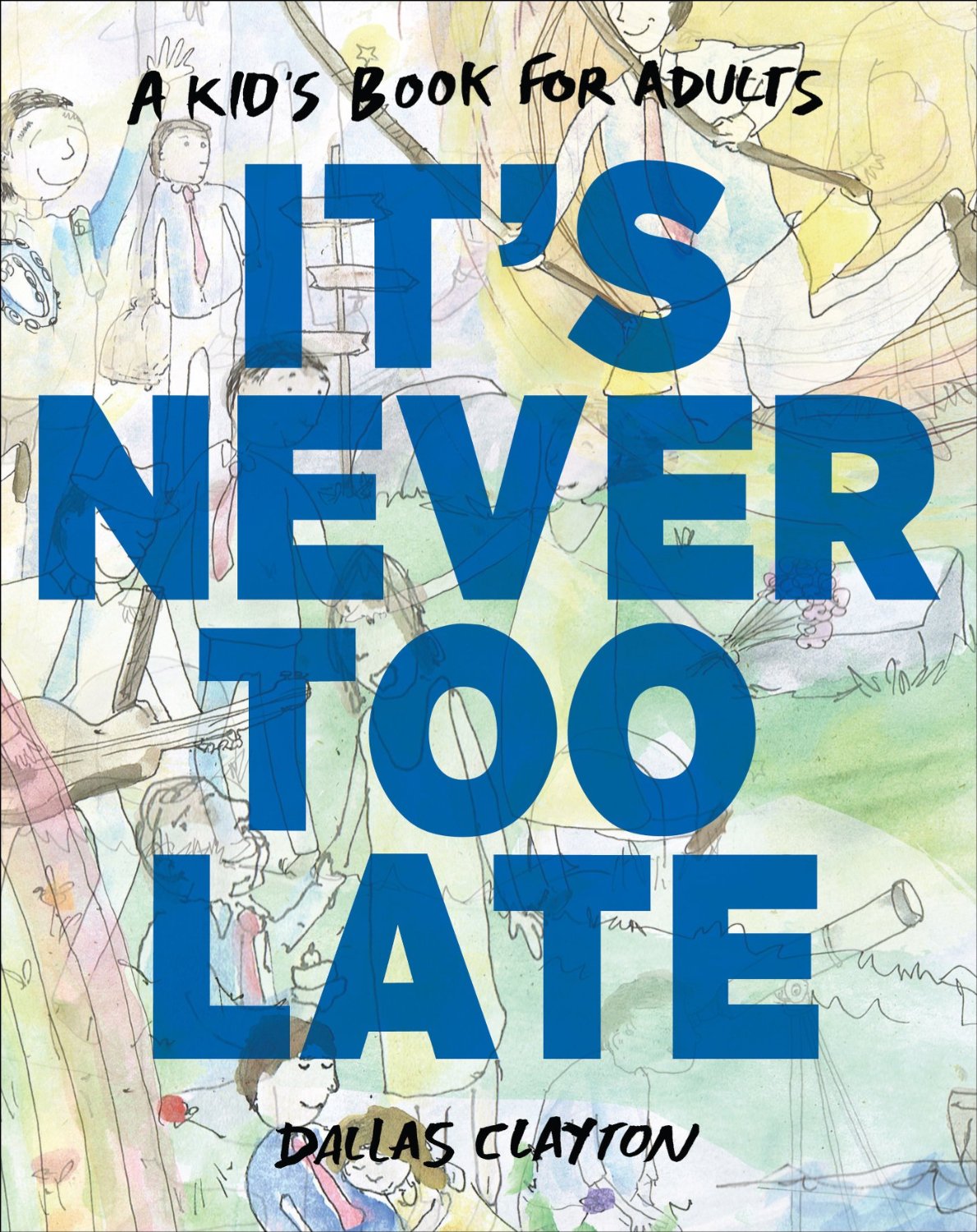
It's Never Too Late
Welcome back to book club!
I hope that reading It's Never Too Late by Dallas Clayton was as refreshing for you as it was for me. This book is short enough that I probably could type the whole thing here, and it still wouldn't be as long as my review of Tess of the d'Urbervilles.
While It's Never Too Late is quite simple, I enjoyed the message: Life is about more than day-to-day maintenance; it's about building meaningful relationships and doing the things that make us happy. Even if you get caught up in the mundane, you don't have to continue that way. (That's my interpretation, at least.)
Some of my favorite parts:
"the truth/ is that nobody has all the answers,/ and everybody’s singers/ and everybody’s dancers."
"everyone’s mind/ gets all full of mess,/ and we all read the signs,/ and we all try our best."
"But it’s never too late/ to say that you care,/ to call up a friend/ you wish was still there.
And it’s never too late/ to start something new,/ to do all the things/ you’ve been longing to do."
I really enjoyed this book. I think the author's unembellished style emphasizes the message he seeks to convey.
For me, It's Never Too Late fit perfectly with my busy summer schedule. Even if you didn't find time for it this month, I recommend you pick this one up when you have a few minutes to spare. It won't take more than 10 minutes to read, and it might remind you to take more care with how you spend the rest of your time. It was a good reminder for me, at least.
Hit me back in a few days for my pick for July!
I hope that reading It's Never Too Late by Dallas Clayton was as refreshing for you as it was for me. This book is short enough that I probably could type the whole thing here, and it still wouldn't be as long as my review of Tess of the d'Urbervilles.
While It's Never Too Late is quite simple, I enjoyed the message: Life is about more than day-to-day maintenance; it's about building meaningful relationships and doing the things that make us happy. Even if you get caught up in the mundane, you don't have to continue that way. (That's my interpretation, at least.)
Some of my favorite parts:
"the truth/ is that nobody has all the answers,/ and everybody’s singers/ and everybody’s dancers."
"everyone’s mind/ gets all full of mess,/ and we all read the signs,/ and we all try our best."
"But it’s never too late/ to say that you care,/ to call up a friend/ you wish was still there.
And it’s never too late/ to start something new,/ to do all the things/ you’ve been longing to do."
I really enjoyed this book. I think the author's unembellished style emphasizes the message he seeks to convey.
For me, It's Never Too Late fit perfectly with my busy summer schedule. Even if you didn't find time for it this month, I recommend you pick this one up when you have a few minutes to spare. It won't take more than 10 minutes to read, and it might remind you to take more care with how you spend the rest of your time. It was a good reminder for me, at least.
Hit me back in a few days for my pick for July!
Monday, June 2, 2014
Tess of the d'Urbervilles Review & New Pick for June
Thanks for joining me for book club!
My pick for May was Tess of the d'Urbervilles by Thomas Hardy. Oh my, what a book. I don't think I realized just how complex the storyline would be when I chose Tess of the d'Urbervilles for book club. I'll do my best to review/summarize it, so bear with me.
Tess of the d'Urbervilles is divided into seven parts or phases. This book is also known as Tess of the d'Urbervilles: A Pure Woman Faithfully Presented, Tess of the d'Urbervilles: A Pure Woman, or simply Tess.
The story starts innocuously enough: Tess's father (John Durbeyfield), a peasant, learns he is descended from an old, noble family: the d'Urbervilles. This information goes to his head, and much of the storyline is fueled by his discovery.
After reading parts one and two (phase the first and phase the second), I had to take a break from this book. Life seemed terribly cruel to poor Tess, who was believable as a pure and innocent character (sometimes such traits seem contrived).
At her father's bidding and against her better judgment, Tess went to work tending fowl for her distant relatives, the d'Urbervilles. The reader finds out that these wealthy relatives are not relatives at all but adopted the name "d'Urberville" some time past. During her stay at Trantridge, Alec d'Urberville takes advantage of a sleeping Tess. That sneaky rotter. Some time later, she returns to her family home in Marlott. There she has a baby, but subsequently the child falls ill and eventually dies unbaptized.
To escape her stigma, Tess finds work at a dairy some distance from her home. There she forms a relationship with Angel Clare. Eventually the two fall in love, and after several refusals from Tess, they become engaged and eventually marry.
Tess tried to confide in Angel on several occasions regarding her liaison with d'Urberville, but it's not until their wedding night that he learns of her bygones. Prior to her own confession, Angel reveals his own past transgression of a similar nature. Tess immediately forgives Angel, but Angel is dismayed by Tess's misdeeds and tells Tess he doesn't love her: “the woman I have been loving is not you.” I don't have enough words to describe the reprehensible hypocrisy of the misnamed Angel Clare.
I was really outraged at this point in the book--he said he loved her! He was kind and honest and made mistakes, but couldn't accept hers? Aaah! Makes me want to scream.
During part of their conversation, Angel and Tess both refer to Alec d'Urberville as Tess's "husband in truth." Angel even mentions that he can only be her true husband if Alec were dead. What a load of bunk. Alec d'Urberville is a lecher in truth. And possibly a rapist. Of course, I believe the author intended to highlight the inequality of moral codes between men and women during that time period. It's still despicable.
Tess soldiers on, however, believing she deserves Angel's censure. Angel leaves the country for Brazil, and Tess returns to her parents' home. Both keep the reason for their separation a secret. Tess doesn't stay long with her parents, but rather finds work on a farm in another area. Poor dear. She works so hard.
Eventually, she crosses paths with the now-reformed Alec d'Urberville as he is preaching to a crowd. D'Urberville found religion and redemption through Angel's father, Pastor Clare. From this time forward, he approaches Tess on several occasions and even offers to marry her to pay for past mistakes. She refuses since she has already married Angel Clare. Alec gives up preaching after speaking with Tess about her own ideologies, which are actually Angel's opinions and beliefs, but Tess believes them wholeheartedly because of her faith in Angel himself.
Tess's luck never does seem to look up, and when she has nowhere else to turn she accepts Alec's offer of financial assistance for herself and her family. Somewhere during the course of this, Angel stops being a blockhead, forgives Tess, and comes back for her. The two have lived separately for over a year at this point. Angel finally realized that he had been harsh with Tess, and he also recognized the hardships Tess endured while trying to provide for herself and her family while he was away. Unfortunatley, as Tess says when she first sees Angel after their estrangement, "it is too late." When Angel finds her, Tess is living with Alec d'Urberville as his wife (even though she is legally married to Angel).
If they weren't already, this is where things get crazy. Tess kills Alec so she can be with Angel. What the what? Angel doesn't know if she really committed murder, though she tells him she has, and they reconcile. They travel the countryside together, moving stealthily, until they get caught, Tess gets arrested, and finally she is executed: "'Justice' was done, and the President of the Immortals, in Aeschylean phrase, had ended his sport with Tess."
In some ways, this is a really horrible book. Probably I sympathize too much with Tess: even when she was calm and demure, I was furious on her behalf. Once again, however, I believe the author intended for the audience to be outraged by Tess's misfortunes at the hands of her father, Alec, and Angel, in particular. In so doing, Mr. Hardy points out both the dichotomies and double standards within the social and moral standards of the Victorian middle class. While I applaud his efforts, it makes for a dismal story. Hardy's agenda is apparent in the byline: A Pure Woman Faithfully Presented. Even the book's ending paragraph included the word justice in quotation marks (as quoted above), as if Tess didn't deserve any sort of sentence for committing murder. Um... no. That said, Tess of the d'Urbervilles is quite captivating.
The book held my attention the whole way through, and the author engaged my emotions quite adeptly. I even learned a neat phrase: petite mort. Even so, I'm not sure I liked this book. I wish it had ended differently. Maybe I'm interpreting the author's intent incorrectly, but I don't sympathize with Tess to the point that I think she should commit murder and get away with it. And since I mentioned it, how in the world does Angel Clare, who couldn't stomach sexual immorality, accept Tess as a murderer? Maybe that's another irony Hardy purposely introduced to the story. Crafty author. Even though I have mixed feeling about the book, I'm still glad I read it. I hope you are too, if you ventured to try this one.
Whew. I applaud you if you made it through all that. On to June.
My pick for the month is
It's Never Too Late
by Dallas Clayton
From Goodreads: From the author who’s been hailed as the “new Dr. Seuss” comes an uplifting book that reminds adults to live each day to the fullest.
Full of wisdom and whimsy, this children’s book for adults is a beautifully written, gorgeously illustrated timeless story for anyone looking for the perfect reminder of just how magical life is. As adults with bills and babysitters, it’s easy for us to get distracted from what matters most in life. Yet if today was the day that it all came crashing down, would you be happy with your life? If not, it’s never too late. It’s never too late to tell someone you care, to start something new, to appreciate life at its fullest. Because at the end of the day it’s the love you’ll remember that you gave and you got.
This one will be an easy read, I'm sure, since it is "a kid's book for adults." After Tess of the d'Urbervilles, I could use an easy read. I have been really curious about this author, so I'm excited to read It's Never Too Late. June is a busy month for me, so a quick read is convenient (for you too, I'd bet).
It's Never Too Late gets an average rating of 4.00 stars on Goodreads and 4.7 stars on Amazon. This book is new enough that it hasn't been reviewed yet on Barnes & Noble.
See you next month!
Sidenote: did you notice that Tess said "it's too late," and the next book's title is "It's Never Too Late"? Ha, ha. That wasn't intentional, but it worked out to be funny.
My pick for May was Tess of the d'Urbervilles by Thomas Hardy. Oh my, what a book. I don't think I realized just how complex the storyline would be when I chose Tess of the d'Urbervilles for book club. I'll do my best to review/summarize it, so bear with me.
Tess of the d'Urbervilles is divided into seven parts or phases. This book is also known as Tess of the d'Urbervilles: A Pure Woman Faithfully Presented, Tess of the d'Urbervilles: A Pure Woman, or simply Tess.
The story starts innocuously enough: Tess's father (John Durbeyfield), a peasant, learns he is descended from an old, noble family: the d'Urbervilles. This information goes to his head, and much of the storyline is fueled by his discovery.
After reading parts one and two (phase the first and phase the second), I had to take a break from this book. Life seemed terribly cruel to poor Tess, who was believable as a pure and innocent character (sometimes such traits seem contrived).
At her father's bidding and against her better judgment, Tess went to work tending fowl for her distant relatives, the d'Urbervilles. The reader finds out that these wealthy relatives are not relatives at all but adopted the name "d'Urberville" some time past. During her stay at Trantridge, Alec d'Urberville takes advantage of a sleeping Tess. That sneaky rotter. Some time later, she returns to her family home in Marlott. There she has a baby, but subsequently the child falls ill and eventually dies unbaptized.
To escape her stigma, Tess finds work at a dairy some distance from her home. There she forms a relationship with Angel Clare. Eventually the two fall in love, and after several refusals from Tess, they become engaged and eventually marry.
Tess tried to confide in Angel on several occasions regarding her liaison with d'Urberville, but it's not until their wedding night that he learns of her bygones. Prior to her own confession, Angel reveals his own past transgression of a similar nature. Tess immediately forgives Angel, but Angel is dismayed by Tess's misdeeds and tells Tess he doesn't love her: “the woman I have been loving is not you.” I don't have enough words to describe the reprehensible hypocrisy of the misnamed Angel Clare.
I was really outraged at this point in the book--he said he loved her! He was kind and honest and made mistakes, but couldn't accept hers? Aaah! Makes me want to scream.
During part of their conversation, Angel and Tess both refer to Alec d'Urberville as Tess's "husband in truth." Angel even mentions that he can only be her true husband if Alec were dead. What a load of bunk. Alec d'Urberville is a lecher in truth. And possibly a rapist. Of course, I believe the author intended to highlight the inequality of moral codes between men and women during that time period. It's still despicable.
Tess soldiers on, however, believing she deserves Angel's censure. Angel leaves the country for Brazil, and Tess returns to her parents' home. Both keep the reason for their separation a secret. Tess doesn't stay long with her parents, but rather finds work on a farm in another area. Poor dear. She works so hard.
Eventually, she crosses paths with the now-reformed Alec d'Urberville as he is preaching to a crowd. D'Urberville found religion and redemption through Angel's father, Pastor Clare. From this time forward, he approaches Tess on several occasions and even offers to marry her to pay for past mistakes. She refuses since she has already married Angel Clare. Alec gives up preaching after speaking with Tess about her own ideologies, which are actually Angel's opinions and beliefs, but Tess believes them wholeheartedly because of her faith in Angel himself.
Tess's luck never does seem to look up, and when she has nowhere else to turn she accepts Alec's offer of financial assistance for herself and her family. Somewhere during the course of this, Angel stops being a blockhead, forgives Tess, and comes back for her. The two have lived separately for over a year at this point. Angel finally realized that he had been harsh with Tess, and he also recognized the hardships Tess endured while trying to provide for herself and her family while he was away. Unfortunatley, as Tess says when she first sees Angel after their estrangement, "it is too late." When Angel finds her, Tess is living with Alec d'Urberville as his wife (even though she is legally married to Angel).
If they weren't already, this is where things get crazy. Tess kills Alec so she can be with Angel. What the what? Angel doesn't know if she really committed murder, though she tells him she has, and they reconcile. They travel the countryside together, moving stealthily, until they get caught, Tess gets arrested, and finally she is executed: "'Justice' was done, and the President of the Immortals, in Aeschylean phrase, had ended his sport with Tess."
In some ways, this is a really horrible book. Probably I sympathize too much with Tess: even when she was calm and demure, I was furious on her behalf. Once again, however, I believe the author intended for the audience to be outraged by Tess's misfortunes at the hands of her father, Alec, and Angel, in particular. In so doing, Mr. Hardy points out both the dichotomies and double standards within the social and moral standards of the Victorian middle class. While I applaud his efforts, it makes for a dismal story. Hardy's agenda is apparent in the byline: A Pure Woman Faithfully Presented. Even the book's ending paragraph included the word justice in quotation marks (as quoted above), as if Tess didn't deserve any sort of sentence for committing murder. Um... no. That said, Tess of the d'Urbervilles is quite captivating.
The book held my attention the whole way through, and the author engaged my emotions quite adeptly. I even learned a neat phrase: petite mort. Even so, I'm not sure I liked this book. I wish it had ended differently. Maybe I'm interpreting the author's intent incorrectly, but I don't sympathize with Tess to the point that I think she should commit murder and get away with it. And since I mentioned it, how in the world does Angel Clare, who couldn't stomach sexual immorality, accept Tess as a murderer? Maybe that's another irony Hardy purposely introduced to the story. Crafty author. Even though I have mixed feeling about the book, I'm still glad I read it. I hope you are too, if you ventured to try this one.
Whew. I applaud you if you made it through all that. On to June.
My pick for the month is
It's Never Too Late
by Dallas Clayton
From Goodreads: From the author who’s been hailed as the “new Dr. Seuss” comes an uplifting book that reminds adults to live each day to the fullest.
Full of wisdom and whimsy, this children’s book for adults is a beautifully written, gorgeously illustrated timeless story for anyone looking for the perfect reminder of just how magical life is. As adults with bills and babysitters, it’s easy for us to get distracted from what matters most in life. Yet if today was the day that it all came crashing down, would you be happy with your life? If not, it’s never too late. It’s never too late to tell someone you care, to start something new, to appreciate life at its fullest. Because at the end of the day it’s the love you’ll remember that you gave and you got.
This one will be an easy read, I'm sure, since it is "a kid's book for adults." After Tess of the d'Urbervilles, I could use an easy read. I have been really curious about this author, so I'm excited to read It's Never Too Late. June is a busy month for me, so a quick read is convenient (for you too, I'd bet).
It's Never Too Late gets an average rating of 4.00 stars on Goodreads and 4.7 stars on Amazon. This book is new enough that it hasn't been reviewed yet on Barnes & Noble.
See you next month!
Sidenote: did you notice that Tess said "it's too late," and the next book's title is "It's Never Too Late"? Ha, ha. That wasn't intentional, but it worked out to be funny.
Sunday, May 11, 2014
Book Club catch-up
I have been a terrible blogger as of late. Life has been busy (out-of-town trips, new jobs, various projects, etc.). I'm trying to catch up, however. Starting with book club.
I never officially selected a book for April because I was finishing up a few series I started a while back (Blackmoore, Allegiant, Extras). I hope you had a chance to read something worthwhile, too. I retroactively declare April "Pick Your Own" month. A cop-out, I know, but that's how the cookie crumbles.
Now that May is well under way, my choice for the month is
Tess of the d'Urbervilles
by Thomas Hardy
From Goodreads: "The chance discovery by a young peasant woman that she is a descendant of the noble family of d'Urbervilles is to change the course of her life. Tess Durbeyfield leaves home on the first of her fateful journeys, and meets the ruthless Alec d'Urberville. Thomas Hardy's impassioned story tells of hope and disappointment, rejection and enduring love."
From Barnes & Noble: "A ne'er-do-well exploits his gentle daughter's beauty for social advancement in this masterpiece of tragic fiction. Hardy's 1891 novel defied convention to focus on the rural lower class for a frank treatment of sexuality and religion. Then and now, his sympathetic portrait of a victim of Victorian hypocrisy offers compelling reading."
This book is available from Project Gutenberg! In case you didn't know, that means you can read Tess of the d'Urbervilles for free! You can download an ebook (.epub or .mobi), or you can read it online. Neat, huh? You can also get the Kindle edition free from Amazon. Or, you know, you can borrow a hard copy from the library (which is what I usually do). So many options.
This book gets an average rating of 3.70 stars on Goodreads, 4.1 stars on Amazon, and 4 stars on Barnes & Noble. I hope I enjoy it as much (and you, too).
I'll see you next month! I promise to come back this time ;-)
I never officially selected a book for April because I was finishing up a few series I started a while back (Blackmoore, Allegiant, Extras). I hope you had a chance to read something worthwhile, too. I retroactively declare April "Pick Your Own" month. A cop-out, I know, but that's how the cookie crumbles.
Now that May is well under way, my choice for the month is
Tess of the d'Urbervilles
by Thomas Hardy
From Goodreads: "The chance discovery by a young peasant woman that she is a descendant of the noble family of d'Urbervilles is to change the course of her life. Tess Durbeyfield leaves home on the first of her fateful journeys, and meets the ruthless Alec d'Urberville. Thomas Hardy's impassioned story tells of hope and disappointment, rejection and enduring love."
From Barnes & Noble: "A ne'er-do-well exploits his gentle daughter's beauty for social advancement in this masterpiece of tragic fiction. Hardy's 1891 novel defied convention to focus on the rural lower class for a frank treatment of sexuality and religion. Then and now, his sympathetic portrait of a victim of Victorian hypocrisy offers compelling reading."
This book is available from Project Gutenberg! In case you didn't know, that means you can read Tess of the d'Urbervilles for free! You can download an ebook (.epub or .mobi), or you can read it online. Neat, huh? You can also get the Kindle edition free from Amazon. Or, you know, you can borrow a hard copy from the library (which is what I usually do). So many options.
This book gets an average rating of 3.70 stars on Goodreads, 4.1 stars on Amazon, and 4 stars on Barnes & Noble. I hope I enjoy it as much (and you, too).
I'll see you next month! I promise to come back this time ;-)
Friday, March 28, 2014
Mao's Last Dancer Review
Welcome back to my lovely book club. On the agenda today: Mao's Last Dancer by Li Cunxin.
I thought this book was a fascinating look at real-life China but accessible to those from the Western world, such as myself. It's a good thing this is a virtual book club, because I have no idea how to pronounce many of the words in this book, including the author’s name (Kuhnksin? Koonksin? Koonkseen?). Update: I found on the Official Site of Li Cunxin that his name is pronounced “Lee Schwin Sing.”
Li’s writing style is engaging and honest--it caught my interest from the very beginning. I imagine it would be difficult writing an entire book in one's second language, but the author does it masterfully. He writes simply with a straightforward manner, but his story isn't simple. Even though much of Li's story is fraught with adversity and grief, he never tells it like a pity party. He just says what happened, and it resonates powerfully.
Li writes of his impoverished childhood survived only by eating despised dried yams. He describes childhood diseases and ills, such as worms and lice, as well as cuts and scrapes bandaged only with dust. He details his complete brainwashing by the Communist government. He writes about his niang’s (niang=mother) heart-wrenching sorrow that she couldn’t provide better for her children.
The author tells of his rampant homesickness when he left home at age 11 to study ballet, his only comforts found in his niang’s quilt and the weeping willow tree where he confessed his sadness; the internal conflict as he studied—and hated—ballet but wanted desperately to bring honor to his family.
The book progresses with Li's exhilaration as he learned to love ballet and found an all-consuming dedication to mastering technique. As he travels to America, his deep-rooted mistrust of Americans quickly fades as he sees true freedom for the first time. His dramatic defection, rather than solving his problems, causes other problems, one of which being fear for his family.
Ultimately, this is a book about the author's courage, determination, passion, and love.
It's worth a read, for sure. I loved every bit of it.
Stay tuned for my pick for April.
I thought this book was a fascinating look at real-life China but accessible to those from the Western world, such as myself. It's a good thing this is a virtual book club, because I have no idea how to pronounce many of the words in this book, including the author’s name (Kuhnksin? Koonksin? Koonkseen?). Update: I found on the Official Site of Li Cunxin that his name is pronounced “Lee Schwin Sing.”
Li’s writing style is engaging and honest--it caught my interest from the very beginning. I imagine it would be difficult writing an entire book in one's second language, but the author does it masterfully. He writes simply with a straightforward manner, but his story isn't simple. Even though much of Li's story is fraught with adversity and grief, he never tells it like a pity party. He just says what happened, and it resonates powerfully.
Li writes of his impoverished childhood survived only by eating despised dried yams. He describes childhood diseases and ills, such as worms and lice, as well as cuts and scrapes bandaged only with dust. He details his complete brainwashing by the Communist government. He writes about his niang’s (niang=mother) heart-wrenching sorrow that she couldn’t provide better for her children.
The author tells of his rampant homesickness when he left home at age 11 to study ballet, his only comforts found in his niang’s quilt and the weeping willow tree where he confessed his sadness; the internal conflict as he studied—and hated—ballet but wanted desperately to bring honor to his family.
The book progresses with Li's exhilaration as he learned to love ballet and found an all-consuming dedication to mastering technique. As he travels to America, his deep-rooted mistrust of Americans quickly fades as he sees true freedom for the first time. His dramatic defection, rather than solving his problems, causes other problems, one of which being fear for his family.
Ultimately, this is a book about the author's courage, determination, passion, and love.
It's worth a read, for sure. I loved every bit of it.
Stay tuned for my pick for April.
Friday, February 28, 2014
The Pelican Brief Review and New Book
Welcome back to SBC!
I hope you enjoyed reading The Pelican Brief by John Grisham.
I enjoyed this one. It's a fairly easy read. The storyline is fast-paced with the right amount of intrigue. It kept me interested, at least.
Darby sure learned how to keep a low profile quickly, which was impressive. She's one of those characters that is a little bit too-good-too-be-true. She wasn't over the top, though, so I can't complain too much.
The storyline never lagged, which was a plus.
On to next month! The book I have selected for March is
Mao's Last Dancer
by Li Cunxin
This one is kind of a cheat: this is the pick for my friend's book club this month. She told me she enjoyed it, so I thought it would be a good pick for my book club.
Mao's Last Dancer is a memoir written by a world famous ballet dancer: Li Cunxin. From Goodreads: From a desperately poor village in northeast China, at age eleven, Li Cunxin was chosen by Madame Mao's cultural delegates to be taken from his rural home and brought to Beijing, where he would study ballet. In 1979, the young dancer arrived in Texas as part of a cultural exchange, only to fall in love with America-and with an American woman. Two years later, through a series of events worthy of the most exciting cloak-and-dagger fiction, he defected to the United States, where he quickly became known as one of the greatest ballet dancers in the world. This is his story, told in his own inimitable voice.
Sounds fascinating to me. I'm really looking forward to reading this one!
This book earns an average of 4.09 stars on Goodreads, 4 stars on Barnes & Noble, and 4.6 stars on Amazon.
I hope you read with me. See you next month!
I hope you enjoyed reading The Pelican Brief by John Grisham.
I enjoyed this one. It's a fairly easy read. The storyline is fast-paced with the right amount of intrigue. It kept me interested, at least.
Darby sure learned how to keep a low profile quickly, which was impressive. She's one of those characters that is a little bit too-good-too-be-true. She wasn't over the top, though, so I can't complain too much.
The storyline never lagged, which was a plus.
On to next month! The book I have selected for March is
Mao's Last Dancer
by Li Cunxin
This one is kind of a cheat: this is the pick for my friend's book club this month. She told me she enjoyed it, so I thought it would be a good pick for my book club.
Mao's Last Dancer is a memoir written by a world famous ballet dancer: Li Cunxin. From Goodreads: From a desperately poor village in northeast China, at age eleven, Li Cunxin was chosen by Madame Mao's cultural delegates to be taken from his rural home and brought to Beijing, where he would study ballet. In 1979, the young dancer arrived in Texas as part of a cultural exchange, only to fall in love with America-and with an American woman. Two years later, through a series of events worthy of the most exciting cloak-and-dagger fiction, he defected to the United States, where he quickly became known as one of the greatest ballet dancers in the world. This is his story, told in his own inimitable voice.
Sounds fascinating to me. I'm really looking forward to reading this one!
This book earns an average of 4.09 stars on Goodreads, 4 stars on Barnes & Noble, and 4.6 stars on Amazon.
I hope you read with me. See you next month!
Thursday, January 30, 2014
The Beekeeper's Apprentice Review & New Pick for February
If your New Year's resolution was to read more books, you have come to the right place! I set the goal last year to read at least one book a month, and I'm still going strong. Every month I read and review one book here on the ol' blog. To see what else I'm reading, hop on over to my Goodreads profile.
I would love to hear about what you are reading, too. Feel free to friend me on Goodreads, or leave me a comment here on the blog. I'm always looking for suggestions, so don't be shy!
I started this year reading The Beekeeper's Apprentice by Laurie R. King. I really enjoyed this one. I hope you did, too.
I always love Sherlock Holmes, but the real star of the show is Mary Russell. She's full of bits of wisdom: “Always carry a length of rope; it’s the most useful thing in the world.” She and Holmes develop a relationship dynamic that was delicious to read.
Even though Holmes is a confirmed pragmatist, he is willing to listen to Mary Russell’s scripture recitations and the like. He is very respectful of this part of young Russell. There is a tenderness to his character that always seems to take me by surprise, and that piece of his makeup is largely what makes Holmes so endearing to me.
Mary Russell is indeed a match for Holmes. She is as smart as he is. Of course, she has less experience, but she had the essential quality that makes her a partner to Holmes: a sort of detachment, the ability to step back and see the bigger picture. Holmes doesn’t ruffle her feathers. They accept one another part and parcel. Even the parts they could disagree on. Their differences enrich their partnership as much as their similarities.
Their adventures are really what make their relationship what it is, though. Of course, you'll have to read the book if you want to know more! I wouldn't spoil it for you.
Overall, I really liked this one. I would recommend it.
My pick for February is
| (source) |
by John Grisham
From John Grisham's official website: In suburban Georgetown a killer’s Reeboks whisper on the front floor of a posh home… In a seedy D.C. porno house a patron is swiftly garroted to death… The next day America learns that two of its Supreme Court justices have been assassinated. And in New Orleans, a young law student prepares a legal brief… To Darby Shaw it was no more than a legal shot in the dark, a brilliant guess. To the Washington establishment it was political dynamite. Suddenly Darby is witness to a murder — a murder intended for her. Going underground, she finds there is only one person she can trust — an ambitious reporter after a newsbreak hotter than Watergate — to help her piece together the deadly puzzle. Somewhere between the bayous of Louisiana and the White House’s inner sanctums, a violent cover-up is being engineered. For somone has read Darby’s brief. Someone who will stop at nothing to destroy the evidence of an unthinkable crime.
John Grisham is a well known author, but I haven't read many of his novels. In fact, I've only read one: The Pelican Brief. The Pelican Brief also happens to be the only movie-based-on-a-John-Grisham-book I've ever seen. I read this one when I was in high school as a part of the book club my best friends and I initiated. There were three of us, and we read three books before our book club seemed to go kaput. I remember liking The Pelican Brief, and while I remember the overall storyline, most of the finer details escape me.
If you've never read a John Grisham novel, this is a good place to start. Plus, you can watch the movie afterwards. Double win!
The Pelican Brief earns an average of 3.87 stars on Goodreads, 3.9 stars on Amazon, and 4.5 stars on Barnes & Noble.
Hit me back next month for my review!
Monday, December 30, 2013
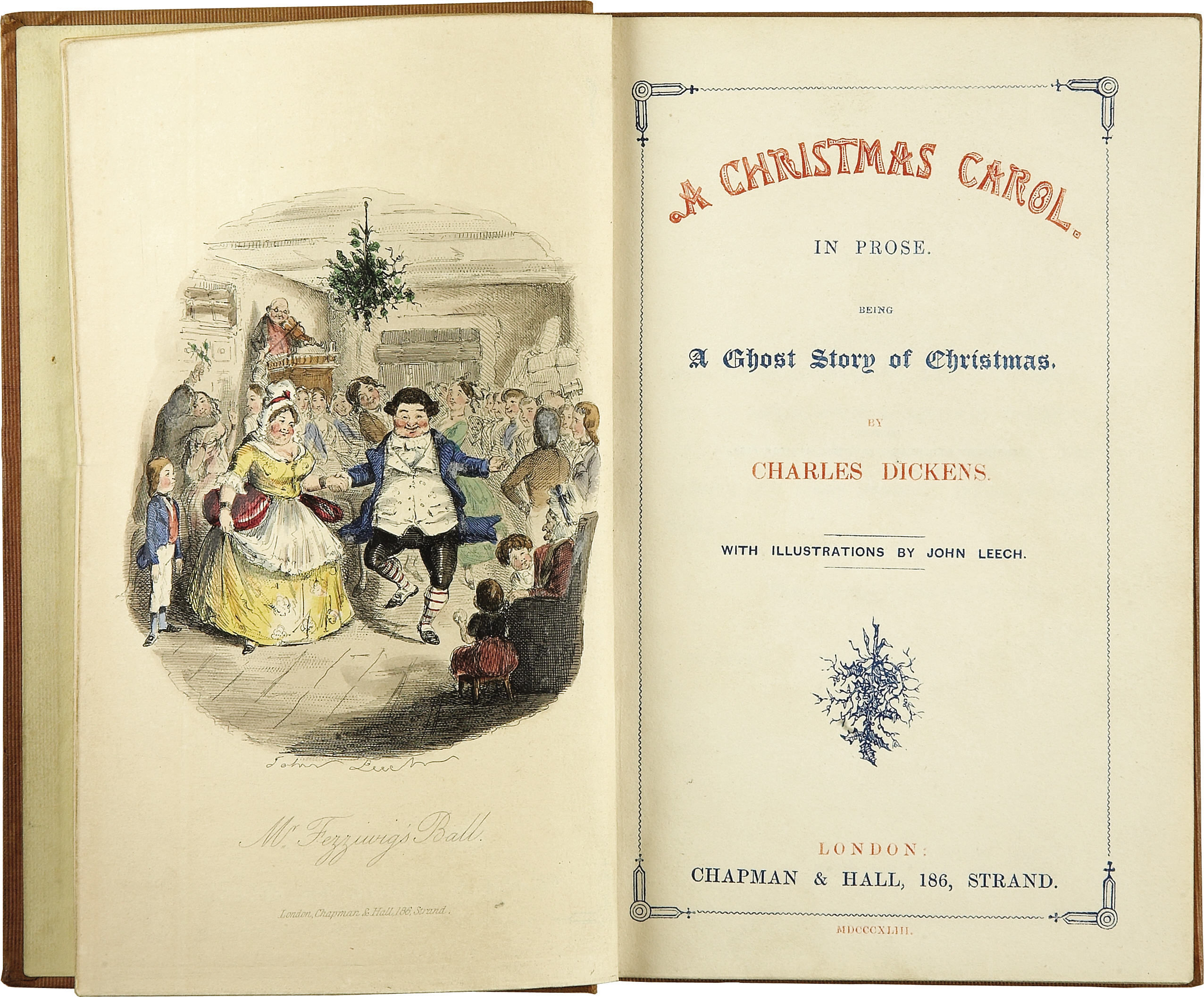
A Christmas Carol Review & New Book
I hope you had a lovely Christmas!
If you didn't get a chance to read A Christmas Carol, you should give it a try.
Since I've seen so many renditions of this story, it was a quick read. I'm sure most everyone is familiar with this classic tale. Ebenezer Scrooge is a grumpy old miser. He has no great love for anyone or anything, with the exception of financial gain.
This compassionless old geezer is visited by the ghost of his former business parter, Jacob Marley. Marley warns Scrooge that his deeds in life will lead him to a miserable afterlife spent doing arduous penance.
After Marley's visit, Scrooge is visited by three other spirits: that of Christmas Past, Christmas Present, and Christmas Yet to Come. By visiting his former, present, and future selves, Scrooge gains a sense of his own humanity.
This change of heart leads Scrooge to act not just with the common courtesy he had neglected to employ heretofore, but with a generosity those around him had never known. He vows to "honor Christmas in [his] heart, and try to keep it all the year." In fact, "it was always said of him that he knew how to keep Christmas well, if any man alive possessed the knowledge." I loved the ending of the book: "May that be truly said of us, and all of us! And so, as Tiny Tim observed, God bless Us, Every One!"
My copy included notes that explained colloquialisms that Dickens used in his novel. Most of them I figured out based on context, but there were a few that I found enlightening. For example: "the name [Scrooge] is derived from a slang term for squeeze or crowd." Maybe I'm just nerdy, but I thought these explanatory notes were interesting.
Dickens has a bit of a sense of humor. After Scrooge has seen Marley's ghost and the ghost of Christmas past, "nothing between a baby and a rhinoceros would have astonished him very much."
A Christmas Carol is a sweet story that embodies the spirit of Christmas. I think this story has endured as a classic because it speaks to something in each of us, even if we only remember it during the Christmas season. Around Christmastime there is an almost palpable change—people become a little more thoughtful, a little kinder, little more honest, a little bit better. Maybe throughout the coming year I will try a bit harder to honor Christmas in my heart.
Speaking of the coming year, can you believe SBC is almost a year old? That's right—I started this virtual book club in January of 2013. Time flies!
To kick off the new year, I've chosen to read
The Beekeeper's Apprentice
by Laurie King
From Amazon: What would happen if Sherlock Holmes, a perfect man of the Victorian age--pompous, smug, and misogynistic--were to come face to face with a twentieth-century female? If she grew to be a partner worthy of his great talents?
Most everyone is familiar with Sherlock Holmes, but this book puts a twist on the classic. I love the modern series Elementary, which has Sherlock Holmes-based storyline that strays from the original. I hope that I will like this twist in the story, too.
From Barnes & Noble: In 1915, Sherlock Holmes is retired and quietly engaged in the study of honeybees when a young woman literally stumbles into him on the Sussex Downs. Fifteen years old, gawky, egotistical, and recently orphaned, the young Mary Russell displays an intellect to impress even Sherlock Holmes—and match him wit for wit. Under his reluctant tutelage, this very modern twentieth-century woman proves a deft protégée and a fitting partner for the Victorian detective. In their first case together, they must track down a kidnapped American senator's daughter and confront a truly cunning adversary—a bomber who has set trip wires for the sleuths and who will stop at nothing to end their partnership. Full of brilliant deductions, disguises, and dangers, this first book of the Mary Russell—Sherlock Holmes mysteries is "wonderfully original and entertaining . . . absorbing from beginning to end."
This book has an average rating of 4.11 out of 5 stars on Goodreads, 4.4 stars on Amazon, and 4.5 stars on Barnes & Noble. I have high hopes for this one!
See me next month for my review. Happy Reading!
If you didn't get a chance to read A Christmas Carol, you should give it a try.
Since I've seen so many renditions of this story, it was a quick read. I'm sure most everyone is familiar with this classic tale. Ebenezer Scrooge is a grumpy old miser. He has no great love for anyone or anything, with the exception of financial gain.
This compassionless old geezer is visited by the ghost of his former business parter, Jacob Marley. Marley warns Scrooge that his deeds in life will lead him to a miserable afterlife spent doing arduous penance.
After Marley's visit, Scrooge is visited by three other spirits: that of Christmas Past, Christmas Present, and Christmas Yet to Come. By visiting his former, present, and future selves, Scrooge gains a sense of his own humanity.
This change of heart leads Scrooge to act not just with the common courtesy he had neglected to employ heretofore, but with a generosity those around him had never known. He vows to "honor Christmas in [his] heart, and try to keep it all the year." In fact, "it was always said of him that he knew how to keep Christmas well, if any man alive possessed the knowledge." I loved the ending of the book: "May that be truly said of us, and all of us! And so, as Tiny Tim observed, God bless Us, Every One!"
My copy included notes that explained colloquialisms that Dickens used in his novel. Most of them I figured out based on context, but there were a few that I found enlightening. For example: "the name [Scrooge] is derived from a slang term for squeeze or crowd." Maybe I'm just nerdy, but I thought these explanatory notes were interesting.
Dickens has a bit of a sense of humor. After Scrooge has seen Marley's ghost and the ghost of Christmas past, "nothing between a baby and a rhinoceros would have astonished him very much."
A Christmas Carol is a sweet story that embodies the spirit of Christmas. I think this story has endured as a classic because it speaks to something in each of us, even if we only remember it during the Christmas season. Around Christmastime there is an almost palpable change—people become a little more thoughtful, a little kinder, little more honest, a little bit better. Maybe throughout the coming year I will try a bit harder to honor Christmas in my heart.
Speaking of the coming year, can you believe SBC is almost a year old? That's right—I started this virtual book club in January of 2013. Time flies!
To kick off the new year, I've chosen to read
| (source) |
by Laurie King
From Amazon: What would happen if Sherlock Holmes, a perfect man of the Victorian age--pompous, smug, and misogynistic--were to come face to face with a twentieth-century female? If she grew to be a partner worthy of his great talents?
Most everyone is familiar with Sherlock Holmes, but this book puts a twist on the classic. I love the modern series Elementary, which has Sherlock Holmes-based storyline that strays from the original. I hope that I will like this twist in the story, too.
From Barnes & Noble: In 1915, Sherlock Holmes is retired and quietly engaged in the study of honeybees when a young woman literally stumbles into him on the Sussex Downs. Fifteen years old, gawky, egotistical, and recently orphaned, the young Mary Russell displays an intellect to impress even Sherlock Holmes—and match him wit for wit. Under his reluctant tutelage, this very modern twentieth-century woman proves a deft protégée and a fitting partner for the Victorian detective. In their first case together, they must track down a kidnapped American senator's daughter and confront a truly cunning adversary—a bomber who has set trip wires for the sleuths and who will stop at nothing to end their partnership. Full of brilliant deductions, disguises, and dangers, this first book of the Mary Russell—Sherlock Holmes mysteries is "wonderfully original and entertaining . . . absorbing from beginning to end."
This book has an average rating of 4.11 out of 5 stars on Goodreads, 4.4 stars on Amazon, and 4.5 stars on Barnes & Noble. I have high hopes for this one!
See me next month for my review. Happy Reading!
Saturday, November 30, 2013
The Pioneer Woman Review & Next Month's Book
Welcome back to SBC! I hope you had a chance to read The Pioneer Woman: Black Heels to Tractor Wheels—A Love Story by Ree Drummond. It's a good one.
Before I start in with my review, I'd just like to say that I pretty much love The Pioneer Woman. She’s just so down-to-earth and funny and spunky. (see this post where she uses Cheez Whiz. I can’t say that I enjoy Cheez Whiz, but I like that she does and she owns it.) She is unapologetically herself with just the right amount of humor.
Now, for the book. It is a sweet love story with a healthy dose of reality (the funny, the embarrassing, and the tragic) added in.
I love the way the author describes her Marlboro Man. "He was a man who had a thought and acted on it immediately....He spent no time at all calculating moves; he had better things to do with his time." Even though he's a cowboy, "He wasn't a country bumpkin. He was poised, gentlemanly, intelligent. And he was no mere man—at least no man the likes of whom I'd ever known. He was different. Strikingly different....He'd taught me that when you love someone, you say it—and that when it comes to matters of the heart, games are for pimply sixteen-year-olds."
Descriptions like these make it easy to see why Ree fell in love.
When she writes about her parents' separation, the heart wrenching reality of it tore at me: "Tears of pain and confusion dampened my pillow as everything I'd ever understood about stability and commitment melted away. And for the first time in weeks—for the first time since Marlboro Man and I shared our first beautiful kiss—love was suddenly the last thing I wanted."
One thing I didn't really love was the constant references to "passion." It was in every other sentence for a while there. Of course, there are also subtle reassurances that Ree and her Marlboro Man maintained their chastity. I just didn't care for it. This is my personal bias coming into play. I think that passion/chemistry/whatever-you-want-to-call-it is important to a relationship, but it's secondary to all the rest: caring, selflessness, conflict resolution, moral character, etc. Citing passion as the foundation for a relationship cheapens the parts that are real and meaningful. But again, that is my opinion.
In her defense, I suppose, she does mention that in times of disappointment and confusion, the passion is what got her through.
I enjoy the way the author writes about how her life changed after meeting and dating Marlboro Man. "He held my heart entirely in his hands, this cowboy, and for the first time in my life, despite everything I'd ever believed about independence and feminism and emotional autonomy, I knew I'd be utterly incomplete without him. Talk about a terrifying moment."
I know my own life has gone drastically away from my chosen plan. That’s a big part of why I relate to Ree, the “accidental country girl.” There are some situations that I never dreamed I would face, and I reacted differently than I ever thought I would. But here's the best part: Somehow, it's okay. It's better than it would have been, in fact. That's what I get from The Pioneer Woman. I'm not going to say this book is on the same literary level as others I've read, but the author writes things that are true for her, and some of those things resonate with me.
And now that you’ve delved into my soulful self, I give you my pick for December:
A Christmas Carol
by Charles Dickens
I thought that A Christmas Carol would be appropriate for the holiday season. I have heard retellings of this story since I was a child, the first being Mickey's Christmas Carol. I love it every time.
But I have a confession. I have never read the real thing: the original book by Charles Dickens. I intend to remedy that this year. I hope you join me!
From Goodreads: Cruel miser Ebeneezer Scrooge has never met a shilling he doesn’t like...and hardly a man he does. And he hates Christmas most of all. When Scrooge is visited by his old partner, Jacob Marley, and the ghosts of Christmas Past, Christmas Present, and Christmas Yet to Come, he learns eternal lessons of charity, kindness, and goodwill. Experience a true Victorian Christmas!
From Amazon: Charles Dickens’ masterfully crafted Christmas fable tells the story of Ebenezer Scrooge, a man with wealth to match the coldness of his heart. On a mystical Christmas Eve, a visitation with spirits forces Scrooge to make a choice: change, or perish.
This Christmas classic gets an average rating of 3.97 stars on Goodreads, 4.7 stars on Amazon, and 4.5 stars at Barnes & Noble.
Get in the Christmas spirit by reading A Christmas Carol with me.
See you next month!
Before I start in with my review, I'd just like to say that I pretty much love The Pioneer Woman. She’s just so down-to-earth and funny and spunky. (see this post where she uses Cheez Whiz. I can’t say that I enjoy Cheez Whiz, but I like that she does and she owns it.) She is unapologetically herself with just the right amount of humor.
Now, for the book. It is a sweet love story with a healthy dose of reality (the funny, the embarrassing, and the tragic) added in.
I love the way the author describes her Marlboro Man. "He was a man who had a thought and acted on it immediately....He spent no time at all calculating moves; he had better things to do with his time." Even though he's a cowboy, "He wasn't a country bumpkin. He was poised, gentlemanly, intelligent. And he was no mere man—at least no man the likes of whom I'd ever known. He was different. Strikingly different....He'd taught me that when you love someone, you say it—and that when it comes to matters of the heart, games are for pimply sixteen-year-olds."
Descriptions like these make it easy to see why Ree fell in love.
When she writes about her parents' separation, the heart wrenching reality of it tore at me: "Tears of pain and confusion dampened my pillow as everything I'd ever understood about stability and commitment melted away. And for the first time in weeks—for the first time since Marlboro Man and I shared our first beautiful kiss—love was suddenly the last thing I wanted."
One thing I didn't really love was the constant references to "passion." It was in every other sentence for a while there. Of course, there are also subtle reassurances that Ree and her Marlboro Man maintained their chastity. I just didn't care for it. This is my personal bias coming into play. I think that passion/chemistry/whatever-you-want-to-call-it is important to a relationship, but it's secondary to all the rest: caring, selflessness, conflict resolution, moral character, etc. Citing passion as the foundation for a relationship cheapens the parts that are real and meaningful. But again, that is my opinion.
In her defense, I suppose, she does mention that in times of disappointment and confusion, the passion is what got her through.
I enjoy the way the author writes about how her life changed after meeting and dating Marlboro Man. "He held my heart entirely in his hands, this cowboy, and for the first time in my life, despite everything I'd ever believed about independence and feminism and emotional autonomy, I knew I'd be utterly incomplete without him. Talk about a terrifying moment."
I know my own life has gone drastically away from my chosen plan. That’s a big part of why I relate to Ree, the “accidental country girl.” There are some situations that I never dreamed I would face, and I reacted differently than I ever thought I would. But here's the best part: Somehow, it's okay. It's better than it would have been, in fact. That's what I get from The Pioneer Woman. I'm not going to say this book is on the same literary level as others I've read, but the author writes things that are true for her, and some of those things resonate with me.
And now that you’ve delved into my soulful self, I give you my pick for December:
A Christmas Carol
by Charles Dickens
I thought that A Christmas Carol would be appropriate for the holiday season. I have heard retellings of this story since I was a child, the first being Mickey's Christmas Carol. I love it every time.
But I have a confession. I have never read the real thing: the original book by Charles Dickens. I intend to remedy that this year. I hope you join me!
From Goodreads: Cruel miser Ebeneezer Scrooge has never met a shilling he doesn’t like...and hardly a man he does. And he hates Christmas most of all. When Scrooge is visited by his old partner, Jacob Marley, and the ghosts of Christmas Past, Christmas Present, and Christmas Yet to Come, he learns eternal lessons of charity, kindness, and goodwill. Experience a true Victorian Christmas!
From Amazon: Charles Dickens’ masterfully crafted Christmas fable tells the story of Ebenezer Scrooge, a man with wealth to match the coldness of his heart. On a mystical Christmas Eve, a visitation with spirits forces Scrooge to make a choice: change, or perish.
This Christmas classic gets an average rating of 3.97 stars on Goodreads, 4.7 stars on Amazon, and 4.5 stars at Barnes & Noble.
Get in the Christmas spirit by reading A Christmas Carol with me.
See you next month!
Tuesday, November 12, 2013
Books Worth Reading (according to me)
If you haven’t been impressed with my picks thus far, you might not want my opinion anymore at all. But if you have a little extra time around the holidays and you need a few recommendations, you've come to the right place.
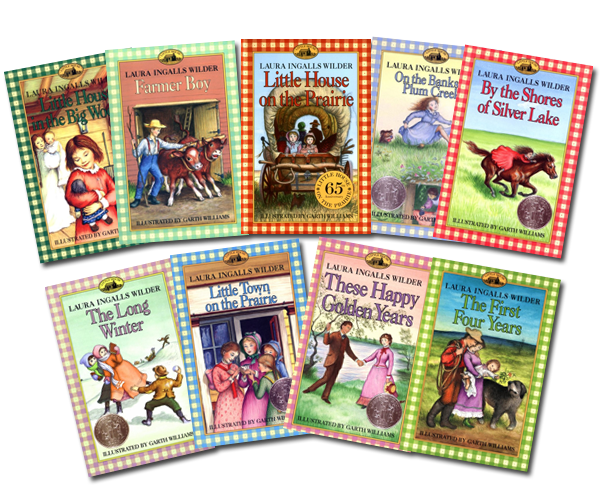
Little House series (featuring the famous Little House on the Prairie) by Laura Ingalls Wilder
This series will keep you busy for a while. If you are like me, that is, and can’t stop after the first book. I started reading this series when I was in the fourth grade, and I have re-read them many times. I am a total sucker for the romance between Almanzo and Laura that concludes the series. Added bonus: these books are based on the author’s life. I think real-life stories are neat.
To Kill a Mockingbird by Harper Lee
Most people probably had to read this in their high school English class. I’m betting that a large portion of those people either A) didn’t read it or B) didn’t appreciate it. I know I didn’t appreciate every book I came across in high school, and my English teacher usually had good enough review sessions that I didn’t actually have to read the book to pass the test. If you didn't read this one in high school, it's worth your time.
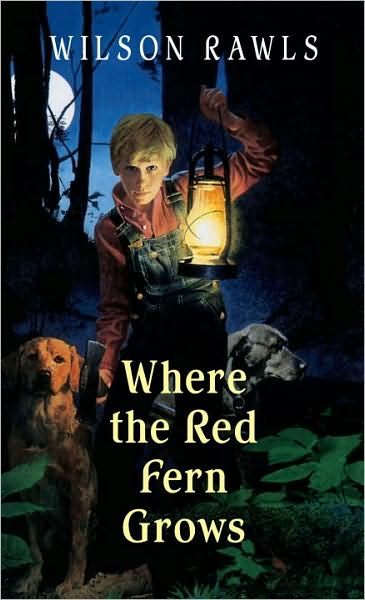
Where the Red Fern Grows by Wilson Rawls
This is another kiddie book, but I love it. My fifth grade teacher recommend that I read with a box of tissues, and she was right. Of course, I am a tender-hearted sap. I love Rawls’s writing style. He writes about the desires of a young boy, and the hard work and heartache he goes through to achieve his dreams.
Divergent series by Veronica Roth
Have you noticed that dystopian novels are having a moment in the limelight? Well, this is right in line with that trend. I have read books 1 and 2 (book 3 is a new release--I haven't gotten my hands on it yet!), and I enjoyed them both. Neat storyline, great characters, intriguing plot. Plus, they’re making it into a movie! Yay!
Blackmoore by Julianne Donaldson
This is another romance from the best-selling author of Edenbrooke. I haven’t had a chance to read it yet, since everyone in my library system seems to have requested it before me, but I anxiously anticipate reading this one. I have heard nothing but good reviews. If you like Regency-era, Jane Austen-type romances, this is one for you. The language makes it more accessible to the modern reader, but the text is studded with terms like "pianoforte."
Happy Reading!
| image source |
This series will keep you busy for a while. If you are like me, that is, and can’t stop after the first book. I started reading this series when I was in the fourth grade, and I have re-read them many times. I am a total sucker for the romance between Almanzo and Laura that concludes the series. Added bonus: these books are based on the author’s life. I think real-life stories are neat.
| image source |
Most people probably had to read this in their high school English class. I’m betting that a large portion of those people either A) didn’t read it or B) didn’t appreciate it. I know I didn’t appreciate every book I came across in high school, and my English teacher usually had good enough review sessions that I didn’t actually have to read the book to pass the test. If you didn't read this one in high school, it's worth your time.
| image source |
This is another kiddie book, but I love it. My fifth grade teacher recommend that I read with a box of tissues, and she was right. Of course, I am a tender-hearted sap. I love Rawls’s writing style. He writes about the desires of a young boy, and the hard work and heartache he goes through to achieve his dreams.
| image source |
Have you noticed that dystopian novels are having a moment in the limelight? Well, this is right in line with that trend. I have read books 1 and 2 (book 3 is a new release--I haven't gotten my hands on it yet!), and I enjoyed them both. Neat storyline, great characters, intriguing plot. Plus, they’re making it into a movie! Yay!
| image source |
This is another romance from the best-selling author of Edenbrooke. I haven’t had a chance to read it yet, since everyone in my library system seems to have requested it before me, but I anxiously anticipate reading this one. I have heard nothing but good reviews. If you like Regency-era, Jane Austen-type romances, this is one for you. The language makes it more accessible to the modern reader, but the text is studded with terms like "pianoforte."
Happy Reading!
Tuesday, October 29, 2013
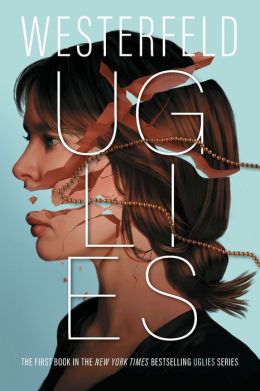
Uglies Review & New Book of the Month
Welcome back to Book Club! I hope you had a chance to read Uglies by Scott Westerfeld.
This one didn’t grab me right away, but about 1/4 or 1/3 of the way through it became a page-turner. Not that it wasn’t interesting at the beginning, but it was easy to put down.
This book takes place in a dystopian society where children are called “littlies” and adolescents are “uglies.” When uglies turn 16, they get an operation to turn them into “pretties.”
I get the premise, but what wasn’t immediately apparent was the reasoning behind it.
I know this is just a book, so I just have to accept the premise to enjoy the story, blah, blah, but I really didn’t think that an entire society undergoing plastic surgery seemed plausible. I mean, the sheer expense of it all seems outrageous. On top of that, mortality rates would skyrocket after full-body cosmetic surgery. I imagine plenty of people would die under the knife.
Again, what the author didn’t mention is that technology and medicine are far enough advanced that they can actually extend life with these operations.
Do you see a pattern here? I wish the author had better explained a lot of elements of the story as they came up.
Moving on, Tally (the main character) has dreamed of becoming a pretty her whole life. Her best friend, Peris, became a pretty 3 months before Tally was scheduled for the operation.
In a stunt to visit her new “pretty” friend, Tally meets Shay. Both of them have been left behind by friends who became pretty or ran away (more on that later). The date of the operation varies based on one’s birthday. It turns out that Tally and Shay have the same birthday, so they will become pretties together.
The two spend time together, pulling some of their best tricks (tricks are usually stunts or pranks that uglies pull). Shay isn’t looking forward to her pretty operation like Tally is, and before they both turn 16, Shay runs away to escape the society of pretties and uglies.
I’ll interject here that I didn’t really know why Shay didn’t want to become a pretty. Mostly because her friends ran away and she met David and kind of fell in love with him, I suppose. But it seems kind of juvenile. Or at least not nearly as compelling a reason as why David’s parents ran away—which begs the question: how did they convince people to run away in the first place?
Back to the story, on the day of her operation, Tally waits for hours. Eventually, she is taken to Special Circumstances—a scary department that most uglies and pretties alike think is just an urban legend. She is scared out of her wits and blackmailed into following Shay so the authorities can find her and the other runaways.
I’ll let you read the rest of the book to learn where the story goes from there.
As far as characters go, I felt like they could have been developed further. Tally’s character sometimes seemed shallow and naïve, but other times she demonstrates deep convictions. I wished I knew more about Peris, since he is Tally’s first best friend. Shay also seemed to lack depth. David was probably the best developed character, I think.
The story ends on an awful cliffhanger. If my copy didn’t have a few pages’ preview of the next book, I might have died.
I hope I like the rest of the series as much as I enjoyed Uglies (despite my critiques), because now I’m in it for the long haul. I can’t not read the other books.
If you're not busy reading Pretties by Scott Westerfeld (the next in the series), might I recommend my pick for November:
The Pioneer Woman
Black Heels to Tractor Wheels—A Love Story
by Ree Drummond
I wanted a change of pace, and I thought this was just the ticket. Instead of another novel, this is a real-life romance! (not much of a change after all...)
After trying The Pioneer Woman's recipe for Baked French Toast, I was hooked. I have been keeping up with the cooking section of her blog ever since. I love PW's wit, spunk, and recipes. It seemed an obvious choice to read her book.
From Amazon: "Wildly popular award-winning blogger, accidental ranch wife, and #1 New York Times bestselling author of The Pioneer Woman Cooks, Ree Drummond (aka The Pioneer Woman) tells the true story of her storybook romance that led her from the Los Angeles glitter to a cattle ranch in rural Oklahoma, and into the arms of her real-life Marlboro Man."
This one gets an average rating of 3.78 stars on Goodreads, 4.4 stars on Amazon, and 4 stars at Barnes & Noble. I hope I enjoy it as much! (and you, too)
See me next month for my review!
This one didn’t grab me right away, but about 1/4 or 1/3 of the way through it became a page-turner. Not that it wasn’t interesting at the beginning, but it was easy to put down.
This book takes place in a dystopian society where children are called “littlies” and adolescents are “uglies.” When uglies turn 16, they get an operation to turn them into “pretties.”
I get the premise, but what wasn’t immediately apparent was the reasoning behind it.
“Right, and things were so great back when everyone was ugly. Or did you miss that day in school?”This philosophy becomes clearer and clearer as the book goes on, but I wish the author had just come out and said that in the beginning.
“Yeah, yeah, I know,” Shay recited. “Everyone judged everyone else based on their appearance. People who were taller got better jobs, and people even voted for some politicians just because they weren’t quite as ugly as everybody else. Blah, blah, blah.”
“Yeah, and people killed one another over stuff like having different skin color.” Tally shook her head No matter how many times they repeated it at school, she’d never really quite believed that one.
I know this is just a book, so I just have to accept the premise to enjoy the story, blah, blah, but I really didn’t think that an entire society undergoing plastic surgery seemed plausible. I mean, the sheer expense of it all seems outrageous. On top of that, mortality rates would skyrocket after full-body cosmetic surgery. I imagine plenty of people would die under the knife.
Again, what the author didn’t mention is that technology and medicine are far enough advanced that they can actually extend life with these operations.
Do you see a pattern here? I wish the author had better explained a lot of elements of the story as they came up.
Moving on, Tally (the main character) has dreamed of becoming a pretty her whole life. Her best friend, Peris, became a pretty 3 months before Tally was scheduled for the operation.
In a stunt to visit her new “pretty” friend, Tally meets Shay. Both of them have been left behind by friends who became pretty or ran away (more on that later). The date of the operation varies based on one’s birthday. It turns out that Tally and Shay have the same birthday, so they will become pretties together.
The two spend time together, pulling some of their best tricks (tricks are usually stunts or pranks that uglies pull). Shay isn’t looking forward to her pretty operation like Tally is, and before they both turn 16, Shay runs away to escape the society of pretties and uglies.
I’ll interject here that I didn’t really know why Shay didn’t want to become a pretty. Mostly because her friends ran away and she met David and kind of fell in love with him, I suppose. But it seems kind of juvenile. Or at least not nearly as compelling a reason as why David’s parents ran away—which begs the question: how did they convince people to run away in the first place?
Back to the story, on the day of her operation, Tally waits for hours. Eventually, she is taken to Special Circumstances—a scary department that most uglies and pretties alike think is just an urban legend. She is scared out of her wits and blackmailed into following Shay so the authorities can find her and the other runaways.
I’ll let you read the rest of the book to learn where the story goes from there.
As far as characters go, I felt like they could have been developed further. Tally’s character sometimes seemed shallow and naïve, but other times she demonstrates deep convictions. I wished I knew more about Peris, since he is Tally’s first best friend. Shay also seemed to lack depth. David was probably the best developed character, I think.
The story ends on an awful cliffhanger. If my copy didn’t have a few pages’ preview of the next book, I might have died.
I hope I like the rest of the series as much as I enjoyed Uglies (despite my critiques), because now I’m in it for the long haul. I can’t not read the other books.
If you're not busy reading Pretties by Scott Westerfeld (the next in the series), might I recommend my pick for November:
The Pioneer Woman
Black Heels to Tractor Wheels—A Love Story
by Ree Drummond
I wanted a change of pace, and I thought this was just the ticket. Instead of another novel, this is a real-life romance! (not much of a change after all...)
After trying The Pioneer Woman's recipe for Baked French Toast, I was hooked. I have been keeping up with the cooking section of her blog ever since. I love PW's wit, spunk, and recipes. It seemed an obvious choice to read her book.
From Amazon: "Wildly popular award-winning blogger, accidental ranch wife, and #1 New York Times bestselling author of The Pioneer Woman Cooks, Ree Drummond (aka The Pioneer Woman) tells the true story of her storybook romance that led her from the Los Angeles glitter to a cattle ranch in rural Oklahoma, and into the arms of her real-life Marlboro Man."
This one gets an average rating of 3.78 stars on Goodreads, 4.4 stars on Amazon, and 4 stars at Barnes & Noble. I hope I enjoy it as much! (and you, too)
See me next month for my review!
Saturday, October 19, 2013
Free Ebook
I just love the word "free."
I don't know how many of you out there are members of The Church of Jesus Christ of Latter-day Saints (aka LDS church aka Mormon church), but I thought I'd share this little gem anyway:
Today through Monday (Oct 21) DEAR JEFF by J Washburn is available for free! It's a book about preparing to enter the temple.
If you would like to know more about the temple, this video can shed some light:
Here is the book description directly from Amazon:
For a more comprehensive review, go here.
Really, I can't say enough about how wonderful this book is.
Go download it. You've got nothing to lose.
Download here: http://www.amazon.com/dp/B00DWTY4JO/ref=cm_sw_su_dp
I don't know how many of you out there are members of The Church of Jesus Christ of Latter-day Saints (aka LDS church aka Mormon church), but I thought I'd share this little gem anyway:
Today through Monday (Oct 21) DEAR JEFF by J Washburn is available for free! It's a book about preparing to enter the temple.
If you would like to know more about the temple, this video can shed some light:
Here is the book description directly from Amazon:
You know, Jeff, even baptism can seem weird—someone dunking you while a bunch of people watch.
That's what happens when you view an ordinance as an isolated act. It can seem weird. And a lot of people feel weirded out by their first temple experience—even people who've taken the official temple prep course.
That's because people are afraid to talk about the temple because it's sacred. It's good to be cautious—I won't argue that. But sometimes our fear can lead to people being shocked and frustrated by the temple—and that's something that definitely shouldn't happen either.
The antidote is simply understanding. This book reveals the deeper tradition and the host of symbols, demystifying the temple experience so that you don’t find yourself saying, “What is it you’re not telling me?” Because I don’t want you to feel that, I’ll explain as much as I can, as well as I can.
I don’t expect this to be the last book on the temple you’ll ever read. Prophets have written on this topic, and if I were trying to rival them, I’d be doomed. Instead, I have—well, not the advantage, but simply—the vantage of being lowly: I’m just your brother. And not having the mantle of apostleship lets me speak less formally—and I won't be afraid to mention Star Wars or Indiana Jones. I’ll also echo what prophets have taught, and I’ll speak candidly—not in a watered-down way, but in a milk-before-meat sort of way, giving you easier access to one of the best things we mortals can have.I had the opportunity to read this book before it was available for purchase. I've got to say, it is really good. I'm not the only one who thinks so, either. From reviews on Amazon:
"The style is very casual, as if it were a conversation with a younger brother or sister which is why the author wrote it. I have never read a book about the temple that covered every aspect of our Temple ceremonies as this book does. He is never inappropriate and quotes from prophets and scriptures."
"This is the most Candid temple book I have ever read that was still reverent and respectful."
"I wish I'd had it before I went through the temple because it helps you know what to expect and, even more, you could start to see what it all means your first time through. I had so many questions afterwards, which I think I could have understood BEFORE going! I highly recommend this to anyone who'd like to understand the temple better."
"Excellent read for those preparing for the temple or people, like myself, who just want to understand it more! I sure wish I'd had this BEFORE I went, especially the first half. I think the book description is very accurate. It increased my understanding and my desire to seek after righteousness and understand things even more! I love the way it is written, too. It's a letter from a friend or older brother who sincerely wants to help the reader."
For a more comprehensive review, go here.
Really, I can't say enough about how wonderful this book is.
Go download it. You've got nothing to lose.
Download here: http://www.amazon.com/dp/B00DWTY4JO/ref=cm_sw_su_dp
Friday, September 27, 2013
Ender's Game Review & Next Month's Pick
Welcome back, my friends! Book Club convenes once more. First on the agenda, Ender's Game by Orson Scott Card. Here is my take:
At age 6, Andrew "Ender" Wiggin leaves his home and family for Battle School. A space station where he will be trained in military strategy.
It's really hard to remember that Ender starts the book at age six—every time the author mentions it, it seems like a surprise. Six years old, and he can set up security systems, master battle techniques, and outthink his commanding officer. Which he does throughout the entire book, I might add, despite his age at any given point.
Ender advances through the ranks with remarkable speed. He is promoted from his launch group (the other kids his age with whom he traveled to the space station) and assigned to an army when he is still 6. Most kids don't advance until age 8.
The purpose of the different armies is to fight mock battles and, in so doing, learn battle technique and strategy. The armies are all named after animals/bugs, e.g. Condor Army, Salamander Army, Rat Army, Scorpion Army, Centipede Army, and so on.
The first army to which Ender is assigned is Salamander Army. His commanding officer, Bonzo, didn't appreciate having the disadvantage of an unexperienced soldier. Bonzo's disdain for Ender continues throughout the book.
Shortly after Ender had been transferred to Salamander Army: “He could see Bonzo’s anger growing hot. Hot anger was bad. Ender’s anger was cold, and he could use it. Bonzo’s was hot, and so it used him.” Ender's calm thinking and strategy make him the best soldier the Battle School has ever seen.
Later on in the book, when Bonzo and company ganged up on Ender in the shower: “He refused to feel weak because he was wet and cold and unclothed. He stood strongly, facing them, his arms at his sides.” I admire Ender's courage. He refused to feel weak just because he was at a disadvantage.
Ender can be calculating, but he has a conscience. He doesn’t just hurt people because he likes the rush of power. He does what is necessary to keep himself safe. And he always feels bad afterwards because he doesn’t want to hurt others. As evidenced by his thoughts: “Everything they can do to beat me, thought Ender. Everything they can think of, change all the rules, they don’t care, just so they beat me. Well, I’m sick of the game. No game is worth Bonzo’s blood pinking the water on the bathroom floor. Ice me, send me home, I don’t want to play anymore.”
When Ender was given an army himself to command, his soldiers advanced quicker than any others. One such solder, Bean (also very young) became a commander as soon as Ender graduated from Battle School (at the ripe old age of 10). “[Bean] was a soldier, and if anyone had asked him what he wanted to be when he grew up, he wouldn’t have known what they meant.”
This is one element of the story that I find very sad: the Battle School robbed Ender (and those like him) of his childhood.
I don't want to introduce any spoilers, so I will just say this: I think it’s pretty sleazy the way the military deceived Ender. I understand the rationale, but it’s sleazy just the same.
The ending was just okay to me. I think it was supposed to be peaceful and profound and whatnot. Meh. Didn’t really resonate with me. I thought it was a bit weak. I’m glad Ender found a way to be happy-ish, I suppose. But mostly I thought he deserved more than that after all he went through.
Even so, I enjoyed it overall. Ender's Game is an interesting story that kept my attention.
Ready for next month? My pick for October is
Uglies
by Scott Westerfeld
Uglies was recommended to me by a friend studying children's literature. In just one semester, she had to read 25 books for her major. Uglies was one of the 25, and she said it was worth the read.
Uglies is both sci-fi and dystopian. I liked the last sci-fi book I read (see above), so I'll give the genre another chance. Dystopian novels (think Hunger Games or Divergent) seem to be in vogue now, too, so the time is ripe for reading this book.
According to Wikipedia, a movie adaptation is in the works. I always enjoy reading the books behind books-turned-movies. Uglies is the first in a series, so if I like this one, I'll stay busy reading the rest. Reading one book that leads me to others is always a plus.
From Goodreads: Tally Youngblood is about to turn sixteen, and she can't wait for the operation that turns everyone from a repellent ugly into a stunningly attractive pretty and catapults you into a high-tech paradise where your only job is to party. But new friend Shay would rather hoverboard to "the Smoke" and be free. Tally learns about a whole new side of the pretty world and it isn't very pretty. The "Special Circumstances" authority Dr Cable offers Tally the worst choice she can imagine: find her friend and turn her in, or never turn pretty at all. The choice Tally makes changes her world forever.
Uglies earns an average rating of 3.88 stars on Goodreads, 4.3 stars on Amazon, and 4.5 stars on Barnes & Noble. Not bad.
See me next month for my review!
At age 6, Andrew "Ender" Wiggin leaves his home and family for Battle School. A space station where he will be trained in military strategy.
It's really hard to remember that Ender starts the book at age six—every time the author mentions it, it seems like a surprise. Six years old, and he can set up security systems, master battle techniques, and outthink his commanding officer. Which he does throughout the entire book, I might add, despite his age at any given point.
Ender advances through the ranks with remarkable speed. He is promoted from his launch group (the other kids his age with whom he traveled to the space station) and assigned to an army when he is still 6. Most kids don't advance until age 8.
The purpose of the different armies is to fight mock battles and, in so doing, learn battle technique and strategy. The armies are all named after animals/bugs, e.g. Condor Army, Salamander Army, Rat Army, Scorpion Army, Centipede Army, and so on.
The first army to which Ender is assigned is Salamander Army. His commanding officer, Bonzo, didn't appreciate having the disadvantage of an unexperienced soldier. Bonzo's disdain for Ender continues throughout the book.
Shortly after Ender had been transferred to Salamander Army: “He could see Bonzo’s anger growing hot. Hot anger was bad. Ender’s anger was cold, and he could use it. Bonzo’s was hot, and so it used him.” Ender's calm thinking and strategy make him the best soldier the Battle School has ever seen.
Later on in the book, when Bonzo and company ganged up on Ender in the shower: “He refused to feel weak because he was wet and cold and unclothed. He stood strongly, facing them, his arms at his sides.” I admire Ender's courage. He refused to feel weak just because he was at a disadvantage.
Ender can be calculating, but he has a conscience. He doesn’t just hurt people because he likes the rush of power. He does what is necessary to keep himself safe. And he always feels bad afterwards because he doesn’t want to hurt others. As evidenced by his thoughts: “Everything they can do to beat me, thought Ender. Everything they can think of, change all the rules, they don’t care, just so they beat me. Well, I’m sick of the game. No game is worth Bonzo’s blood pinking the water on the bathroom floor. Ice me, send me home, I don’t want to play anymore.”
When Ender was given an army himself to command, his soldiers advanced quicker than any others. One such solder, Bean (also very young) became a commander as soon as Ender graduated from Battle School (at the ripe old age of 10). “[Bean] was a soldier, and if anyone had asked him what he wanted to be when he grew up, he wouldn’t have known what they meant.”
This is one element of the story that I find very sad: the Battle School robbed Ender (and those like him) of his childhood.
I don't want to introduce any spoilers, so I will just say this: I think it’s pretty sleazy the way the military deceived Ender. I understand the rationale, but it’s sleazy just the same.
The ending was just okay to me. I think it was supposed to be peaceful and profound and whatnot. Meh. Didn’t really resonate with me. I thought it was a bit weak. I’m glad Ender found a way to be happy-ish, I suppose. But mostly I thought he deserved more than that after all he went through.
Even so, I enjoyed it overall. Ender's Game is an interesting story that kept my attention.
Ready for next month? My pick for October is
Uglies
by Scott Westerfeld
Uglies was recommended to me by a friend studying children's literature. In just one semester, she had to read 25 books for her major. Uglies was one of the 25, and she said it was worth the read.
Uglies is both sci-fi and dystopian. I liked the last sci-fi book I read (see above), so I'll give the genre another chance. Dystopian novels (think Hunger Games or Divergent) seem to be in vogue now, too, so the time is ripe for reading this book.
According to Wikipedia, a movie adaptation is in the works. I always enjoy reading the books behind books-turned-movies. Uglies is the first in a series, so if I like this one, I'll stay busy reading the rest. Reading one book that leads me to others is always a plus.
From Goodreads: Tally Youngblood is about to turn sixteen, and she can't wait for the operation that turns everyone from a repellent ugly into a stunningly attractive pretty and catapults you into a high-tech paradise where your only job is to party. But new friend Shay would rather hoverboard to "the Smoke" and be free. Tally learns about a whole new side of the pretty world and it isn't very pretty. The "Special Circumstances" authority Dr Cable offers Tally the worst choice she can imagine: find her friend and turn her in, or never turn pretty at all. The choice Tally makes changes her world forever.
Uglies earns an average rating of 3.88 stars on Goodreads, 4.3 stars on Amazon, and 4.5 stars on Barnes & Noble. Not bad.
See me next month for my review!
Tuesday, August 27, 2013
The Anatomy of Peace Review & Book-of-September
Welcome, once again, to Book Club! First order of business: The Anatomy of Peace by the Arbinger Institute.
The main premise of the book is that solutions to people problems are always deeper than outward actions. The Arbinger Institute uses a story format to teach these principles. The story focuses on a man named Lou and his relationships with family members and coworkers. The writing style is cheesy at times, but the concepts within more than make up for it in my opinion.
The terms “heart at peace” and “heart at war” seemed hokey to me at first, but these are simply terms for a concept I don’t find hokey at all:
“In every moment, we are choosing…In the way we regard our children, our spouses, neighbors, colleagues, and strangers, we choose to see others either as people like ourselves or objects. They either count like we do or they don’t. In the former case, since we regard them as we regard ourselves, we say our hearts are at peace toward them. In the latter case, since we systematically view them as inferior, we say our hearts are at war.”
The part of the book that hit me the hardest is toward the beginning: “Seeing an equal person as an inferior object is an act of violence, Lou. It hurts as much as a punch to the face. In fact, in many ways it hurts more. Bruises heal more quickly than emotional scars do.”
This really made me sit up and pay attention.
I read this book for the first time when I was in college. It was an extra credit assignment for one of my classes. It really opened my eyes. The ideas contained in this book were very new to me. Now, it’s almost old hat. But not because the lessons aren’t profound for me any longer, but just because they are so familiar I take them for granted. When I first read this book, I tried really hard to constantly keep my heart at peace. I thought it got good at it, too.
I lived for a long time thinking I had this mastered—keeping my heart at peace. It occurred to me recently that I am good at surrounding myself with people with whom I am at peace. When I come in contact with someone at war, I still am quick to take up my own weapons and go to war myself.
Of course, as The Anatomy of Peace points out: “…difficult choices are still choices. No one, whatever their actions, can deprive me of the ability to choose my own way of being. Difficult people are nevertheless people, and it always remains in my power to see them that way.”
Such a profound read. I hope you add it to your to-read list if you haven't already.
Now for next month. For September, my pick is
Ender's Game
by Orson Scott Card
This is a title I've heard about for years. It's been on my to-read list for quite some time, but sci-fi isn't usually my genre. Since the movie will be hitting the box office in November, I think it's time to give Ender's Game a try. I figure if I read it this month, I can beat the library rush. (If you're a true bookworm, you know what I'm talking about.)
From Goodreads: In order to develop a secure defense against a hostile alien race's next attack, government agencies breed child geniuses and train them as soldiers. A brilliant young boy, Andrew "Ender" Wiggin lives with his kind but distant parents, his sadistic brother Peter, and the person he loves more than anyone else, his sister Valentine. Peter and Valentine were candidates for the soldier-training program but didn't make the cut—young Ender is the Wiggin drafted to the orbiting Battle School for rigorous military training.
Ender's skills make him a leader in school and respected in the Battle Room, where children play at mock battles in zero gravity. Yet growing up in an artificial community of young soldiers Ender suffers greatly from isolation, rivalry from his peers, pressure from the adult teachers, and an unsettling fear of the alien invaders. His psychological battles include loneliness, fear that he is becoming like the cruel brother he remembers, and fanning the flames of devotion to his beloved sister.
Is Ender the general Earth needs? But Ender is not the only result of the genetic experiments. The war with the Buggers has been raging for a hundred years, and the quest for the perfect general has been underway for almost as long. Ender's two older siblings are every bit as unusual as he is, but in very different ways. Between the three of them lie the abilities to remake a world. If, that is, the world survives.
Ender's Game has an average rating of 4.28 stars on Goodreads and 4.6 stars on Amazon. In addition, Ender's Game is the winner of the 1985 Nebula Award for Best Novel and the 1986 Hugo Award for Best Novel. Impressive résumé!
Hit me back next month for my review!
The main premise of the book is that solutions to people problems are always deeper than outward actions. The Arbinger Institute uses a story format to teach these principles. The story focuses on a man named Lou and his relationships with family members and coworkers. The writing style is cheesy at times, but the concepts within more than make up for it in my opinion.
The terms “heart at peace” and “heart at war” seemed hokey to me at first, but these are simply terms for a concept I don’t find hokey at all:
“In every moment, we are choosing…In the way we regard our children, our spouses, neighbors, colleagues, and strangers, we choose to see others either as people like ourselves or objects. They either count like we do or they don’t. In the former case, since we regard them as we regard ourselves, we say our hearts are at peace toward them. In the latter case, since we systematically view them as inferior, we say our hearts are at war.”
The part of the book that hit me the hardest is toward the beginning: “Seeing an equal person as an inferior object is an act of violence, Lou. It hurts as much as a punch to the face. In fact, in many ways it hurts more. Bruises heal more quickly than emotional scars do.”
This really made me sit up and pay attention.
I read this book for the first time when I was in college. It was an extra credit assignment for one of my classes. It really opened my eyes. The ideas contained in this book were very new to me. Now, it’s almost old hat. But not because the lessons aren’t profound for me any longer, but just because they are so familiar I take them for granted. When I first read this book, I tried really hard to constantly keep my heart at peace. I thought it got good at it, too.
I lived for a long time thinking I had this mastered—keeping my heart at peace. It occurred to me recently that I am good at surrounding myself with people with whom I am at peace. When I come in contact with someone at war, I still am quick to take up my own weapons and go to war myself.
Of course, as The Anatomy of Peace points out: “…difficult choices are still choices. No one, whatever their actions, can deprive me of the ability to choose my own way of being. Difficult people are nevertheless people, and it always remains in my power to see them that way.”
Such a profound read. I hope you add it to your to-read list if you haven't already.
Now for next month. For September, my pick is
| (source) |
by Orson Scott Card
This is a title I've heard about for years. It's been on my to-read list for quite some time, but sci-fi isn't usually my genre. Since the movie will be hitting the box office in November, I think it's time to give Ender's Game a try. I figure if I read it this month, I can beat the library rush. (If you're a true bookworm, you know what I'm talking about.)
From Goodreads: In order to develop a secure defense against a hostile alien race's next attack, government agencies breed child geniuses and train them as soldiers. A brilliant young boy, Andrew "Ender" Wiggin lives with his kind but distant parents, his sadistic brother Peter, and the person he loves more than anyone else, his sister Valentine. Peter and Valentine were candidates for the soldier-training program but didn't make the cut—young Ender is the Wiggin drafted to the orbiting Battle School for rigorous military training.
Ender's skills make him a leader in school and respected in the Battle Room, where children play at mock battles in zero gravity. Yet growing up in an artificial community of young soldiers Ender suffers greatly from isolation, rivalry from his peers, pressure from the adult teachers, and an unsettling fear of the alien invaders. His psychological battles include loneliness, fear that he is becoming like the cruel brother he remembers, and fanning the flames of devotion to his beloved sister.
Is Ender the general Earth needs? But Ender is not the only result of the genetic experiments. The war with the Buggers has been raging for a hundred years, and the quest for the perfect general has been underway for almost as long. Ender's two older siblings are every bit as unusual as he is, but in very different ways. Between the three of them lie the abilities to remake a world. If, that is, the world survives.
Ender's Game has an average rating of 4.28 stars on Goodreads and 4.6 stars on Amazon. In addition, Ender's Game is the winner of the 1985 Nebula Award for Best Novel and the 1986 Hugo Award for Best Novel. Impressive résumé!
Hit me back next month for my review!
Monday, August 19, 2013
Monday, July 29, 2013
ECKSDOT Review, New Book-of-the-Month Pick, and a Birthday Wish
If that weren’t reason enough, I also read this post on author J Washburn’s blog. The part that really caught me: "I think [J.K.] Rowling is leagues beyond me in her characterization. (And I include BACKSTORY as part of that.) But I think I could outdo her in plot." I don’t know if he was referring to ECKSDOT when he wrote that (he has other books in the works), but I have been burning with curiosity ever since.
Curiosity didn't kill this cat, since I was able to snag a copy for free.
I like Nate as a main character. Throughout the book, I was conscious of his age as well as challenges and restrictions associated with his youth. He has parents, just like any kid. He has to go to school. He has a secret crush on a cute girl. He has a playground nemesis. He shares a room with his brother. He has a wonderful imagination. Overall, he is a very relatable character.
The title character Ecks, or Ecksdot, is harder to describe. For a long time, I didn't really know what was going on with Ecks. I thought it was weird how he seemed to be narrating, but he constantly addressed Nate as “you”. Of course, the reason for this became apparent about 3/4 of the way through the book.
I'm still a little unsure as to how drawing a continuous line on his body enabled Nate to see another dimension. Similarly, I wish the "butterfly lady" had a larger role. She helped Nate become a Nexus, but (like I said) I'm still not sure how that even happened.
I liked the illustrations dotted throughout the book. Toward the beginning of the book, some of the descriptions were a little lost on me, so the illustrations were helpful.
Most of the other-worldly rules and such were introduced a little at a time, making it easier to digest.
The chapter headings drove me crazy. One or two letters in gray, the rest in black (e.g. Chapter 3: Danny’s Nonsense, o in gray). I’m positive it means something, but I don’t know what.
ECKSDOT is the first in a series. I didn’t know that going in, so I was looking for a more complete ending. As it happened, I turned the last page before I found out there that will be a sequel.
I think this book is well-suited to pre-adolescent and adolescent boys, especially ones with big imaginations. Fitting, since this is a YA (young adult) book.
Subsequent books might prove to be more intriguing, but this one rates average for me.
On to next month! My book choice for August is
The Anatomy of Peace
by The Arbinger Institute
This pick, funny enough, is inspired by J Washburn. Every year for his birthday, J invites his friends to read The Anatomy of Peace. His birthday, like mine, is in July. As such, he usually asks that friends and family read The Anatomy of Peace during the month of July. I'm a little late to the party, but I'm issuing a similar invitation.
My birthday is tomorrow. As a gift to me, I invite you to read The Anatomy of Peace during the next month.
I have read this book before, and I was impressed enough that I bought it. I haven't gotten back to it in a few years, so this will be a good refresher for me.
From Goodreads: Written as an engaging story, this book shows how mistaken views can cause people to misread situations and exacerbate the issues they wish to improve. Arguing that it is only after they understand themselves and get their internal house in order that they can correctly confront external conflicts, the book shows what can be done to make that happen, and how to make inner peace a potent tool for achieving outer satisfaction.
This book is sort of a prequel to Leadership and Self-Deception, which was also written by the Arbinger Institute. Leadership and Self-Deception is a wonderful book. It focuses on interpersonal relations within the workplace. The Anatomy of Peace deals with a similar topic, but with wider application.
From Publishers Weekly (as found on Amazon.com): The premise of this follow-up to Leadership and Self-Deception is simple: people whose hearts are at peace do not wage war, whether they're heads of state or members of a family. In this semi-fictional narrative ("inspired by actual events") illustrating the principles of achieving peace, the setting is a two-day parent workshop at an Arizona-based wilderness camp for out-of-control teenagers, but the storyline is a mere setting for an instruction manual. Workshop facilitators Yusuf al-Falah, a Palestinian Arab whose father was killed by Israelis in 1948, and Avi Rozen, an Israeli Jew whose father died in the Yom Kippur War, use examples from their domestic lives and the history of their region to illustrate situations in which the normal and necessary routines of daily life can become fodder for conflict. Readers observe this through the eyes of one participant, a father whose business is in nearly as much trouble as his teenage son. The usefulness of the information conveyed here on how conflicts take root, spread and can be resolved more than compensates for the pedestrian writing.
I hope you choose to read with me :-)
Wednesday, June 26, 2013
Mrs. Mike Review & Next Month's Book
I'll start right in with Mrs. Mike by Benedict and Nancy Freedman. Mrs. Mike is a tender story about the life and romance of Katherine Mary O’Fallon and Mike Flannigan. If this story doesn’t pull at your heartstrings, you have no soul.
My only real complaint was how quickly the story progressed at the beginning: I wish the authors had developed Mike and Kathy’s story a bit more before they got married. They saw each other on all of 3 occasions before getting engaged and then married. The majority of the book takes place after Mike and Kathy's marriage.
Even the sweetest love story isn't without tragedy, and Mrs. Mike has it in spades. Though they had more than their fair share of misfortune and conflict, this added an element of depth and reality to the book.
A hopeless romantic at heart, some of my favorite parts were Mike and Kathy's first kiss (“It was something I had not known, this melting away into feeling”) and the night they got engaged (“We held each other, and I had never had him so close”). Lovely.
There were a few parts where I didn't relate to the characters all that well, but that might have been a flaw in my reading, as opposed to a flaw in the writing.
Definitely a worthwhile read.
For July, I have selected the book
ECKSDOT
by J Washburn
As I mentioned, I'm aquainted with this author. He is an extremely creative guy, so I can't wait to read his work.
From the author: "ECKSDOT is the adventure of Nate and his 'slow friend' Danny as they seek an oracle—an old Japanese 'butterfly lady'—in the hopes of somehow stopping their horrible nightmares of ghost robots—nightmares that have been bleeding into their real lives."
You can learn more about ECKSDOT here.
Happy Reading!
My only real complaint was how quickly the story progressed at the beginning: I wish the authors had developed Mike and Kathy’s story a bit more before they got married. They saw each other on all of 3 occasions before getting engaged and then married. The majority of the book takes place after Mike and Kathy's marriage.
Even the sweetest love story isn't without tragedy, and Mrs. Mike has it in spades. Though they had more than their fair share of misfortune and conflict, this added an element of depth and reality to the book.
A hopeless romantic at heart, some of my favorite parts were Mike and Kathy's first kiss (“It was something I had not known, this melting away into feeling”) and the night they got engaged (“We held each other, and I had never had him so close”). Lovely.
There were a few parts where I didn't relate to the characters all that well, but that might have been a flaw in my reading, as opposed to a flaw in the writing.
Definitely a worthwhile read.
For July, I have selected the book
| (source) |
by J Washburn
As I mentioned, I'm aquainted with this author. He is an extremely creative guy, so I can't wait to read his work.
From the author: "ECKSDOT is the adventure of Nate and his 'slow friend' Danny as they seek an oracle—an old Japanese 'butterfly lady'—in the hopes of somehow stopping their horrible nightmares of ghost robots—nightmares that have been bleeding into their real lives."
You can learn more about ECKSDOT here.
Happy Reading!
Thursday, June 6, 2013
ECKSDOT: Get it While it's Free!
A friend of mine wrote a book, and (for a limited time) it's available for free.
ECKSDOT
by J Washburn
Book description: ECKSDOT is the adventure of Nate and his "slow friend" Danny as they seek an oracle—an old Japanese "butterfly lady"—in the hopes of somehow stopping their horrible nightmares of ghost robots—nightmares that have been bleeding into their real lives.
This book averages 4.7 out of 5 stars on Amazon. I know I'm excited to read this one. As always, you can count on my honest review of this book as soon as I finish reading it.
Get the free book for Kindle here: http://amzn.to/ZzENKW
If you don't have a Kindle, find out how to read the ebook here: http://goo.gl/JKzmA
This deal is only available June 6 - 9, so start downloading!
ECKSDOT
by J Washburn
Book description: ECKSDOT is the adventure of Nate and his "slow friend" Danny as they seek an oracle—an old Japanese "butterfly lady"—in the hopes of somehow stopping their horrible nightmares of ghost robots—nightmares that have been bleeding into their real lives.
This book averages 4.7 out of 5 stars on Amazon. I know I'm excited to read this one. As always, you can count on my honest review of this book as soon as I finish reading it.
Get the free book for Kindle here: http://amzn.to/ZzENKW
If you don't have a Kindle, find out how to read the ebook here: http://goo.gl/JKzmA
This deal is only available June 6 - 9, so start downloading!
Thursday, May 23, 2013
Fablehaven Review and June Book of the Month
Welcome back to Book Club!
If you haven't finished reading Fablehaven by Brandon Mull, no worries. Just come back and read my review later. There is a full week left in May, after all.
For the rest of you, here it is:
Fablehaven is a preserve for mystical creatures (fable=myth, haven=sanctuary). Of course, I knew that going into the story because I read the book description. However, our main characters, Kendra and Seth, did not know what they were getting into when they went to stay with their Grandpa and Grandma Sorenson. I was interested to find out how they would discover the true nature of their grandparents’ estate.
I found this part of the storyline a little disappointing. The “puzzle” was a bit simplistic. Kendra seemed to solve it without much effort, and boom! Grandpa let her in on a pretty heavy secret. It didn’t seem like much of a test, which was Grandpa’s objective in planning it. I can’t complain too much, though, since Kendra and Seth (at 13 and 11 years old) can still be considered children.
The governance of Fablehaven was explained well, I thought. It’s easy for a fantasy novel to set up an elaborate moral code that is hard to comprehend. Fablehaven’s “mischief for mischief” and “magic for magic” was both logical and easy to follow. (Of course, there is more to it than that--borders of where creatures can go, etc. These other rules aren't explained in this book. Maybe this will be cleared up in one of the sequels?)
There were a few parts of the book that I thought were predictable. As soon as something was stated to be unlikely, it happened (e.g. None of the creatures should have even gotten close to the kids' window, but all manner of creatures were right outside taunting them). That said, Kendra’s solution wasn’t completely see-through.
As the first book in a series, I appreciated that this book had a resolution, but the storyline was also set up for a sequel(s). This book could easily stand alone, but there were several elements within Fablehaven that I would be interested to learn more about—the creatures themselves, the nuances of the treaty, exceptions to rules (like Midsummer Eve), magical artifacts, other secret refuges, etc. I imagine the story will get richer as these are explained.
I thought it was clever that on the last page of my book were the words “drink the milk”—as if I had just read the Journal of Secrets. It was a surprise that enhanced the reading experience.
Overall, a fun read. Fablehaven is a piece of children's literature, and I think it is perfect for its intended audience.
Now for June:
Mrs. Mike
by Benedict Freedman & Nancy Mars Freedman
From Goodreads: A moving love story set in the Canadian wilderness, Mrs. Mike is a classic tale that has enchanted millions of readers worldwide. It brings the fierce, stunning landscape of the Great North to life-and tenderly evokes the love that blossoms between Sergeant Mike Flannigan and beautiful young Katherine Mary O'Fallon.
From Amazon.com: Recently arrived in Calgary, Alberta after a long, hard journey from Boston, sixteen-year-old Katherine Mary O’Fallon never imagined that she could lose her heart so easily—or so completely. Standing over six feet tall, with “eyes so blue you could swim in them,” Mike Flannigan is a well-respected sergeant in the Canadian Mounted Police—and a man of great courage, kindness, and humor. Together, he and his beloved Kathy manage to live a good, honest life in this harsh, unforgiving land—and find strength in a love as beautiful and compelling as the wilderness around them…
Once again, this book was brought to my attention via my friends, but they aren't the only ones who give this book rave reviews: It gets an average 4.12 star rating on Goodreads and 4.8 stars on Amazon.
For those of you who favor e-books, this one might be hard to find. I hear that it is out of print, but I was able to borrow a hard copy from my library without any problem.
Throw this book in your beach bag, and give it a read while you're out enjoying the sunshine. I know I will. See you next month!
If you haven't finished reading Fablehaven by Brandon Mull, no worries. Just come back and read my review later. There is a full week left in May, after all.
For the rest of you, here it is:
Fablehaven is a preserve for mystical creatures (fable=myth, haven=sanctuary). Of course, I knew that going into the story because I read the book description. However, our main characters, Kendra and Seth, did not know what they were getting into when they went to stay with their Grandpa and Grandma Sorenson. I was interested to find out how they would discover the true nature of their grandparents’ estate.
I found this part of the storyline a little disappointing. The “puzzle” was a bit simplistic. Kendra seemed to solve it without much effort, and boom! Grandpa let her in on a pretty heavy secret. It didn’t seem like much of a test, which was Grandpa’s objective in planning it. I can’t complain too much, though, since Kendra and Seth (at 13 and 11 years old) can still be considered children.
The governance of Fablehaven was explained well, I thought. It’s easy for a fantasy novel to set up an elaborate moral code that is hard to comprehend. Fablehaven’s “mischief for mischief” and “magic for magic” was both logical and easy to follow. (Of course, there is more to it than that--borders of where creatures can go, etc. These other rules aren't explained in this book. Maybe this will be cleared up in one of the sequels?)
There were a few parts of the book that I thought were predictable. As soon as something was stated to be unlikely, it happened (e.g. None of the creatures should have even gotten close to the kids' window, but all manner of creatures were right outside taunting them). That said, Kendra’s solution wasn’t completely see-through.
As the first book in a series, I appreciated that this book had a resolution, but the storyline was also set up for a sequel(s). This book could easily stand alone, but there were several elements within Fablehaven that I would be interested to learn more about—the creatures themselves, the nuances of the treaty, exceptions to rules (like Midsummer Eve), magical artifacts, other secret refuges, etc. I imagine the story will get richer as these are explained.
I thought it was clever that on the last page of my book were the words “drink the milk”—as if I had just read the Journal of Secrets. It was a surprise that enhanced the reading experience.
Overall, a fun read. Fablehaven is a piece of children's literature, and I think it is perfect for its intended audience.
Now for June:
| (source) |
by Benedict Freedman & Nancy Mars Freedman
From Goodreads: A moving love story set in the Canadian wilderness, Mrs. Mike is a classic tale that has enchanted millions of readers worldwide. It brings the fierce, stunning landscape of the Great North to life-and tenderly evokes the love that blossoms between Sergeant Mike Flannigan and beautiful young Katherine Mary O'Fallon.
From Amazon.com: Recently arrived in Calgary, Alberta after a long, hard journey from Boston, sixteen-year-old Katherine Mary O’Fallon never imagined that she could lose her heart so easily—or so completely. Standing over six feet tall, with “eyes so blue you could swim in them,” Mike Flannigan is a well-respected sergeant in the Canadian Mounted Police—and a man of great courage, kindness, and humor. Together, he and his beloved Kathy manage to live a good, honest life in this harsh, unforgiving land—and find strength in a love as beautiful and compelling as the wilderness around them…
Once again, this book was brought to my attention via my friends, but they aren't the only ones who give this book rave reviews: It gets an average 4.12 star rating on Goodreads and 4.8 stars on Amazon.
For those of you who favor e-books, this one might be hard to find. I hear that it is out of print, but I was able to borrow a hard copy from my library without any problem.
Throw this book in your beach bag, and give it a read while you're out enjoying the sunshine. I know I will. See you next month!
Monday, April 29, 2013
Edenbrooke Review (& Next Month's Book)
Let's cut right to the chase: Edenbrooke by Julianne Donaldson is a fanciful romance.
As much as I hate to admit it, I am a sucker for a romance. For me, this guilty pleasure reaches its zenith in the midst of Lords and Ladies who spend the season in London and the rest of the year “in the country.”
Enter Edenbrooke.
It’s not deep or profound, but oh my, is it enjoyable. I didn’t want to stop reading. I really liked that this romance had just the right amount of intrigue without being vulgar or racy--a trait that can be hard to find in the romance genre.
The book begins with our two little love birds somewhat at odds with each other: “Philip Wyndam is an incorrigible flirt, and I did not like that about him. Not one bit” (p. 72).
But in the end, all is right: “…he kissed me again, and again, and whispered things too sublime to repeat, until I was thoroughly convinced he was madly in love with me, Marianne Daventry, a girl with no great figure, too many freckles, and a propensity for twirling. And then I knew I had met my match” (p. 247). Ah [satisfied sigh].
How they get to this delicious end is the fun of it all. If you didn’t read Edenbrooke this month, put it on your to-read list. It’s a keeper. The real problem is that now I want a nice gentleman to woo me. (Pass that along if you know any. Gentlemen, that is.)
On to next month! The book I have selected for May is
Fablehaven
by Brandon Mull
From Goodreads: For centuries, mystical creatures of all description were gathered to a hidden refuge called Fablehaven to prevent their extinction. The sanctuary survives today as one of the last strongholds of true magic in a cynical world. Enchanting? Absolutely. Exciting? You bet. Safe? Well, actually, quite the opposite ... Kendra and her brother Seth have no idea their grandfather is the current caretaker of Fablehaven. Inside the gated woods, ancient laws give relative order among greedy trolls, mischievous satyrs, plotting witches, spiteful imps, and jealous fairies. However, when the rules get broken, an arcane evil is unleashed, forcing Kendra and Seth to face the greatest challenge of their lives. To save her family, Fablehaven, and perhaps the world, Kendra must find the courage to do what she fears most.
Since last month's pick was a romance, I wanted a change of pace. Fablehaven is a fantasy novel and a New York Times bestseller. Several of my friends have read--and loved--this book. As always, I'll let you know my review at the end of the month. If you want to read this yourself, let me know what you think.
Here's to another adventure in reading!
As much as I hate to admit it, I am a sucker for a romance. For me, this guilty pleasure reaches its zenith in the midst of Lords and Ladies who spend the season in London and the rest of the year “in the country.”
Enter Edenbrooke.
It’s not deep or profound, but oh my, is it enjoyable. I didn’t want to stop reading. I really liked that this romance had just the right amount of intrigue without being vulgar or racy--a trait that can be hard to find in the romance genre.
The book begins with our two little love birds somewhat at odds with each other: “Philip Wyndam is an incorrigible flirt, and I did not like that about him. Not one bit” (p. 72).
But in the end, all is right: “…he kissed me again, and again, and whispered things too sublime to repeat, until I was thoroughly convinced he was madly in love with me, Marianne Daventry, a girl with no great figure, too many freckles, and a propensity for twirling. And then I knew I had met my match” (p. 247). Ah [satisfied sigh].
How they get to this delicious end is the fun of it all. If you didn’t read Edenbrooke this month, put it on your to-read list. It’s a keeper. The real problem is that now I want a nice gentleman to woo me. (Pass that along if you know any. Gentlemen, that is.)
On to next month! The book I have selected for May is
Fablehaven
by Brandon Mull
From Goodreads: For centuries, mystical creatures of all description were gathered to a hidden refuge called Fablehaven to prevent their extinction. The sanctuary survives today as one of the last strongholds of true magic in a cynical world. Enchanting? Absolutely. Exciting? You bet. Safe? Well, actually, quite the opposite ... Kendra and her brother Seth have no idea their grandfather is the current caretaker of Fablehaven. Inside the gated woods, ancient laws give relative order among greedy trolls, mischievous satyrs, plotting witches, spiteful imps, and jealous fairies. However, when the rules get broken, an arcane evil is unleashed, forcing Kendra and Seth to face the greatest challenge of their lives. To save her family, Fablehaven, and perhaps the world, Kendra must find the courage to do what she fears most.
Since last month's pick was a romance, I wanted a change of pace. Fablehaven is a fantasy novel and a New York Times bestseller. Several of my friends have read--and loved--this book. As always, I'll let you know my review at the end of the month. If you want to read this yourself, let me know what you think.
Here's to another adventure in reading!
Subscribe to:
Posts (Atom)